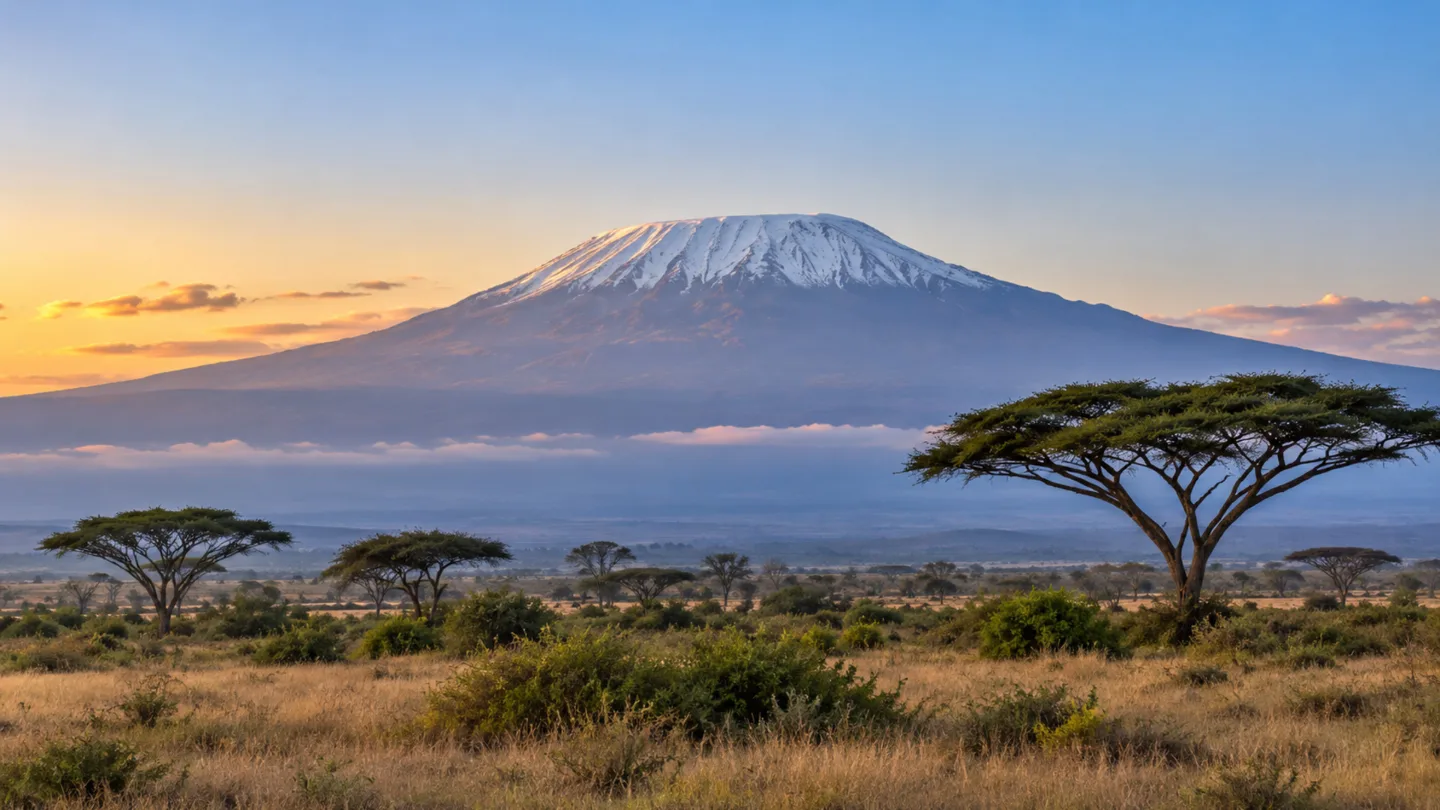
Mount Kilimanjaro

Mount Kilimanjaro

On foot to the roof of Africa

Highlights

  • Uhuru Peak at 5,895 metres, the highest point in Africa
  • Five climate zones on one mountain, from montane forest to the summit
  • At least seven routes, five to nine days long
  • Huts on the Marangu route, tents on all the others
  • No climbing gear needed, just stamina and patience
  • UNESCO World Heritage Site since 1987

Safari: prefer to plan it yourself?

Put your safari together in the trip planner.

Mount Kilimanjaro at a glance

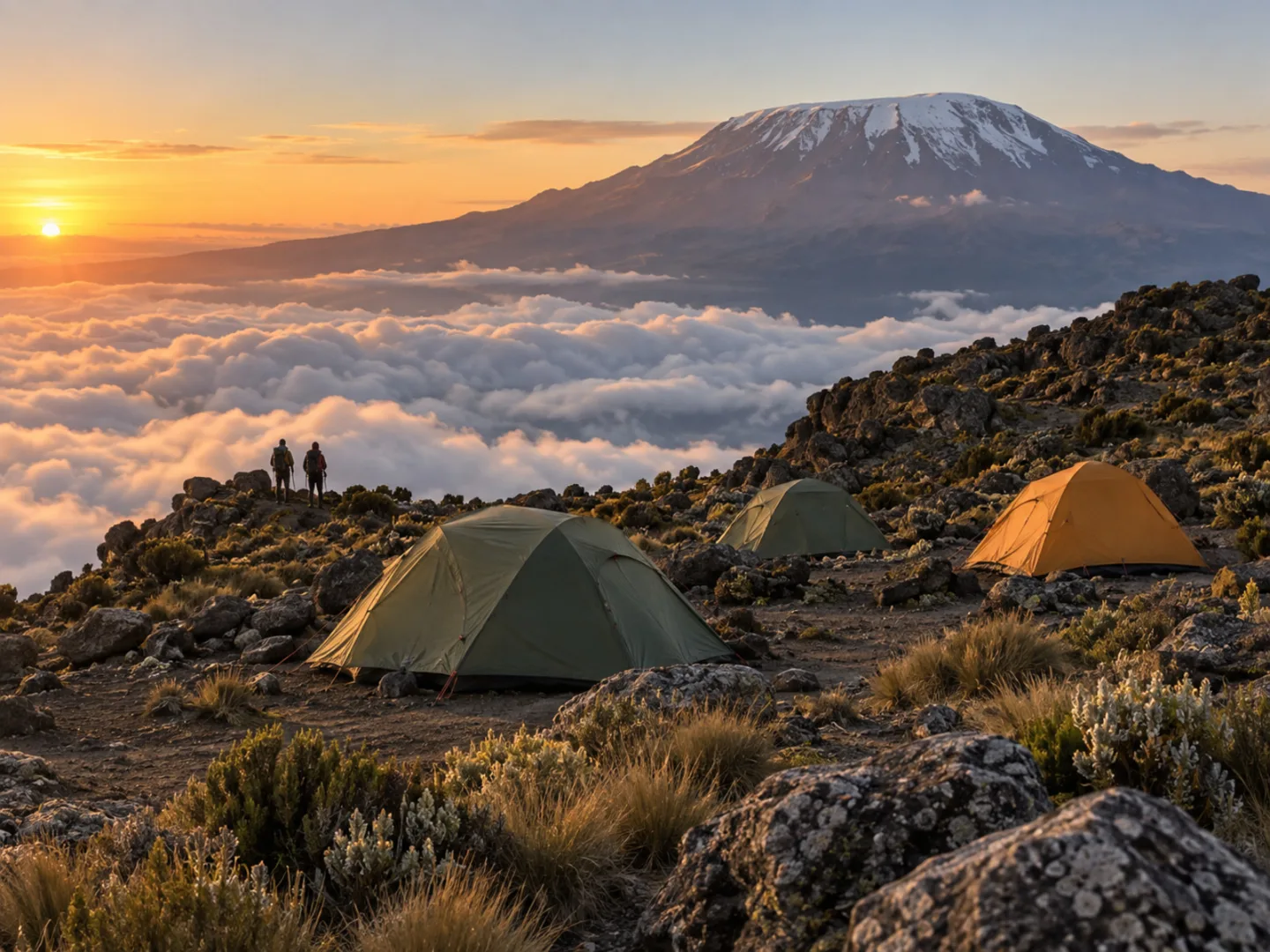
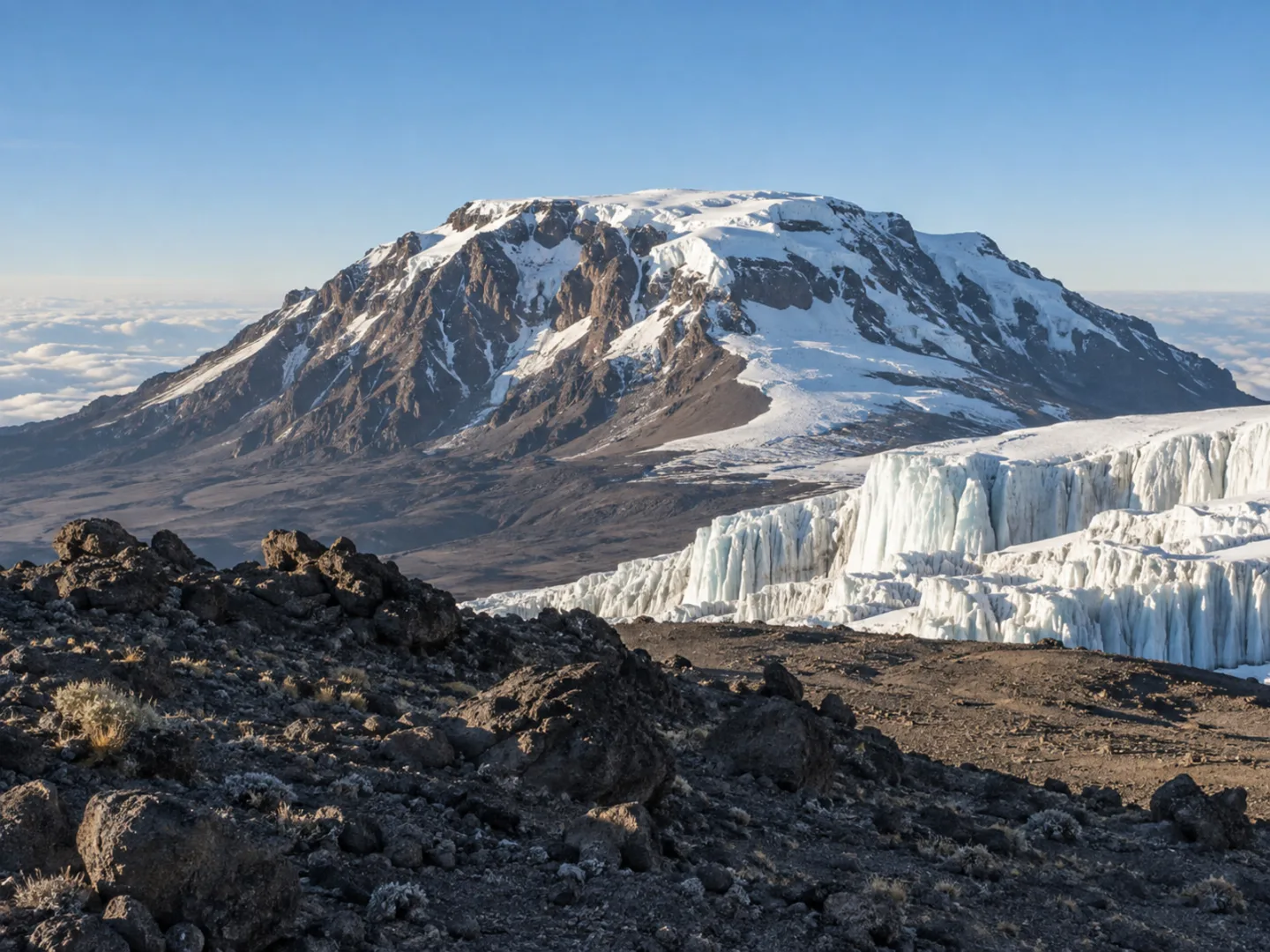
At 5,895 metres, Kilimanjaro is the highest mountain in Africa. It stands entirely on its own, rising almost 4,900 metres above the plains of northern Tanzania, which makes it the highest free-standing mountain in the world. And although it sits close to the equator, its summit keeps its snow all year round.

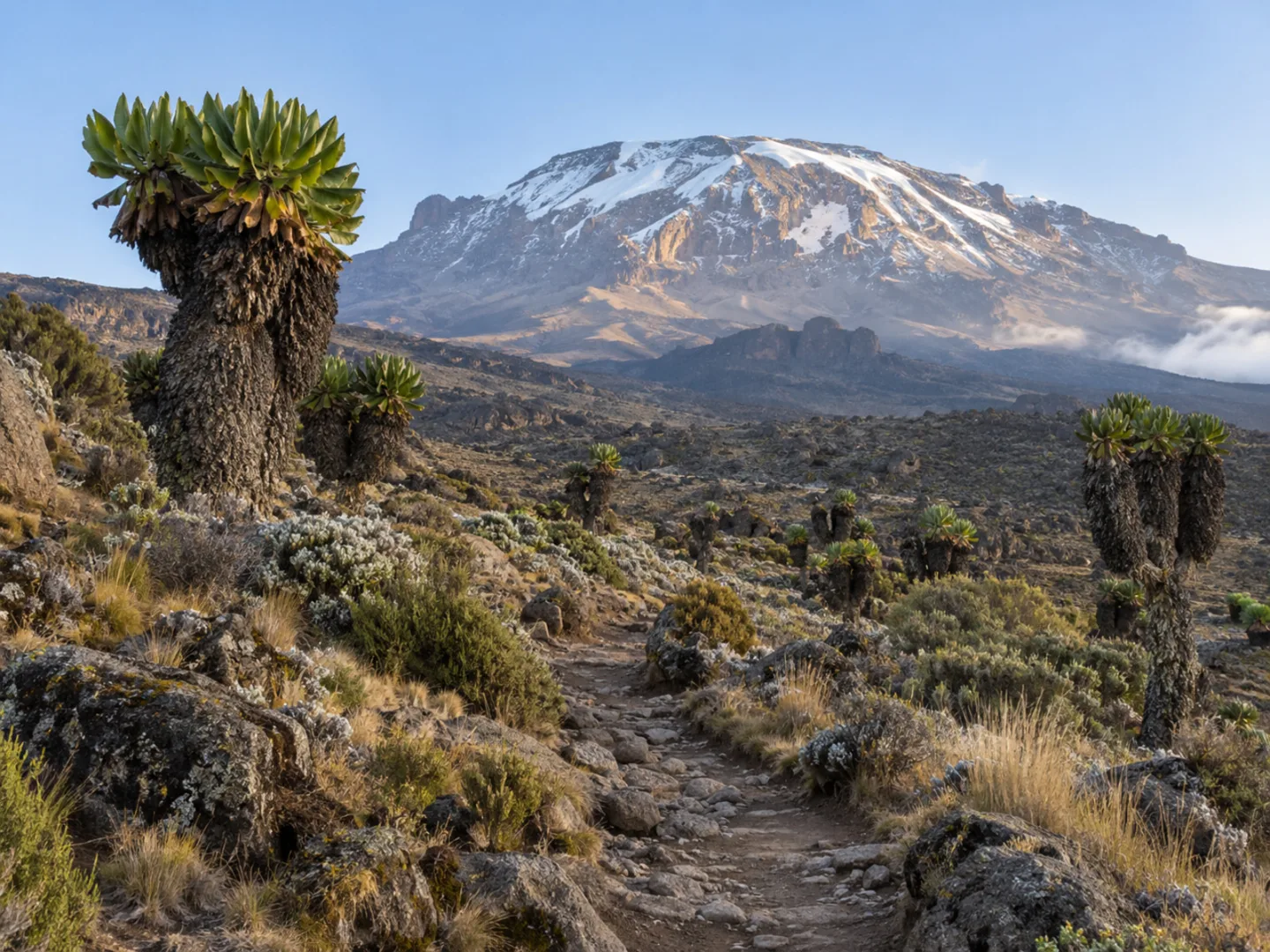
What makes it special is that you need no climbing gear. According to the national park authority, healthy adults of normal fitness should be able to reach the top, provided they bring patience and stamina. On the way up you pass through five climate zones, from montane forest through heath and moorland to the summit zone. A trip from the equator to the Arctic, just on foot.

Impressions

Seven routes to the top

At least seven routes lead up Kibo, the highest of the massif's three peaks. What sets them apart is mainly how much time they give your body to adjust to the altitude. Marangu is the oldest route and the only one with huts instead of tents. It is usually sold as a five-day climb, but an extra day for acclimatisation is strongly recommended. Incidentally, you go up and come down the same way.

Machame, nicknamed the “Whiskey route”, is the most popular. It takes six to seven days and follows the principle of “climb high, sleep low”. Lemosho starts on the western side, crosses the Shira Plateau and later joins the Machame route. It is considered one of the most scenic routes, and for the first few days you will hardly meet another group.

Rongai climbs from the north, close to the Kenyan border. The Northern Circuit loops around the northern side of the mountain and, at eight to ten days, is the longest route. And Umbwe? Steep and direct, it is best left to experienced mountaineers.

Pole pole and summit night

There is one phrase you will hear constantly on the mountain: pole pole, Swahili for “slowly, slowly”. The real challenge is the altitude, not the terrain. A good rule of thumb is to allow at least seven days, as six is too short for many climbers. Every extra day gives your body more time to adapt.

Summit day starts in the middle of the night. After tea and biscuits you set off at around 11.30 pm by the light of your head torch. For six to eight hours you climb a steep path to the crater rim: Stella Point on Machame and Lemosho, Gilman's Point on Marangu, Rongai and the Northern Circuit. From Stella Point it is another 45 to 60 minutes to Uhuru Peak.

And if you don't make the summit, you haven't failed. The Shira Plateau or the top of the Barranco Wall will still show you just how vast this mountain is.

Guides, porters and safety

You cannot go it alone. Unaccompanied climbs have been banned since 1991; you need a licensed guide working for a registered operator. Porters and a cook complete the team. On every route except Marangu, one or two porters per climber are the norm, so you only carry your daypack.

The biggest danger on the mountain is altitude sickness. Headaches and nausea are typical signs, and they should never be ignored. What helps is going down: the symptoms then ease. You should also take out good travel insurance. The Kilimanjaro Porters Assistance Project (KPAP) keeps an eye on fair working conditions for porters, checking among other things how operators pay their crews.

Good to know: Kilimanjaro combines easily with a safari. Arusha, Tarangire and Lake Manyara are each within a day's drive of Moshi.

Best time to travel

Kilimanjaro can be climbed all year round, but the weather on the mountain is erratic. The best months are the dry spells from late June to October and from late December to February or early March. Bear in mind, though, that June to October is also the coldest time on the mountain.

From mid-March to early June it is the rainy season, and you should expect plenty of rain on the trail. The upside: there are few groups on the mountain and everything is green. November often brings the short rains, with heavy showers mostly at night or early in the morning.

Getting there

Kilimanjaro International Airport to Moshi
about 45 minutes
Kilimanjaro International Airport to Marangu (park headquarters)
86 kilometres
Bases for the climb
Moshi and Arusha, also Marangu

Your operator takes care of the transfer to the start of your route.

Fees

A climb involves park entry, hut or camping fees and a rescue fee, and these apply to your crew of guides and porters too. With us, these fees are included in the quoted price. Tips for guides, cook and porters are customary and come on top.

Matching tours

2 days · 1 tour

Mount Kilimanjaro: Overnight Camp at Mandara HutsInstantly bookable

Mount Kilimanjaro: Overnight Camp at Mandara Huts

Trek the first stretch of Kilimanjaro’s Marangu Trail with expert guides, spend a night at the scenic Mandara Huts, and descend through lush rainforest the next morning.

2 daysfrom €503.55 pp

Final price incl. fees

5 days · 1 tour

Mount Kilimanjaro: 5-6 Day Marangu RouteInstantly bookable

Mount Kilimanjaro: 5-6 Day Marangu Route

Climb Kilimanjaro via the Marangu Route in 5–6 days, summit on Day 4, and descend comfortably with hut stays and a built-in flex day if needed.

5 daysfrom €1,641.45 pp

Final price incl. fees

6 days · 1 tour

Mount Kilimanjaro: 6-7 Day Machame RouteInstantly bookable

Mount Kilimanjaro: 6-7 Day Machame Route

Summit Kilimanjaro via the Machame Route in 6–7 days, reaching Uhuru Peak on Day 5 and descending safely with a flexible buffer day if needed.

6 daysfrom €1,819.39 pp

Final price incl. fees

7 days · 1 tour

Mount Kilimanjaro: 7-8 Day Lemosho RouteInstantly bookable

Mount Kilimanjaro: 7-8 Day Lemosho Route

Climb Kilimanjaro via the scenic Lemosho Route in 7–8 days, summit on Day 6, and descend safely with built-in flexibility for acclimatization and weather.

7 daysfrom €2,016.07 pp

Final price incl. fees

10 days · 1 tour

10 Day Adventure: Tour de KilimanjaroInstantly bookable

10 Day Adventure: Tour de Kilimanjaro

A 10-day Tanzania cycling adventure: villages, waterfalls, forests & hot springs, wildlife encounters, and a Tarangire safari—culture, nature, and adventure combined.

10 daysfrom €1,964.56 pp

Final price incl. fees

15 days · 1 tour

15 Day Adventure: Kilimanjaro & the SerengetiInstantly bookable

15 Day Adventure: Kilimanjaro & the Serengeti

Summit Kilimanjaro via Machame, then enjoy a Serengeti safari. 15 days with private or group options and flexible stays—camping, lodge, or premium.

15 daysfrom €3,566.04 pp

Final price incl. fees

Frequently asked questions

How hard is climbing Kilimanjaro?
Not technically. You need no climbing skills or specialist equipment. What makes it hard is the altitude, the rough and sometimes steep terrain and the basic accommodation, day after day. Summit day is the toughest: you set off at around 11.30 pm and climb a steep path for six to eight hours to the crater rim. If you lead an active, healthy life and spend a few weeks hiking with a backpack beforehand, you should in principle be able to make it.
Which route has the highest success rate?
The short answer: the longer ones. Lemosho, at seven or eight days, and the Northern Circuit, at eight to ten days, give you the most time to adjust to the altitude. Machame over seven days also follows the principle of “climb high, sleep low”. Marangu is often sold as a five-day climb. Because you gain height steadily there, the risk of not reaching the summit is comparatively high. An extra day considerably reduces the risk of altitude sickness.
Can you climb Kilimanjaro without a guide?
No. Tanzanian national park rules require every climb to be accompanied by licensed guides. Permits are issued only to authorised operators and their registered guests; checks at the gates are strict. Guides set the pace, spot altitude sickness early and, with their team, organise the entire logistics.
How long does preparation for Kilimanjaro take?
Three to six months are ideal. Training combines endurance and strength; hikes with a backpack and elevation gain are the most valuable. Booking, flights, visa and insurance should be in place two to three months beforehand, earlier in high season. Walking boots must be broken in well in advance, ideally on a multi-day test hike.

Send us a message

We put your route together — free of obligation and in person. We reply the same day, usually faster on WhatsApp.

Dominic Dreiner

Prefer to talk? Dominic Dreiner is happy to help.

Your enquiry about: Mount Kilimanjaro

Please provide name, phone number, email and number of travellers.