
Overview
A 4-day safari in Tanzania is the ideal length of time to get a comprehensive glimpse of East Africa’s wildlife without spending weeks on the road. In the north, you can explore the Serengeti (with a focus on travel time) or enjoy a relaxed combination of Tarangire and Ngorongoro. In the south, Nyerere (Selous) or Mikumi, accessible from Dar es Salaam, offer logistically smart alternatives for short trips.
Key Takeaways
- 4 days are enough, but seeing the “Big Five” and various landscapes requires careful route planning.
- Serengeti by Car (Road) It can be done in 4 days, but that means long travel times on days 2 and 4 (about 6 hours of travel time each way).
- Fly-in Safaris (e.g., directly from Zanzibar to the Serengeti) turn travel time into pure game-viewing time—ideal when time is limited.
- Seasonal Highlights: From December through March, it’s worth focusing on the Ndutu region (wildebeest calving season); from May through June, the Western Corridor.
- Ngorongoro Crater begins It is included in almost all northern routes and offers the highest concentration of wildlife in a very small area.
- Southern Circuit (Nyerere/Selous): A great alternative starting from Dar es Salaam/Zanzibar if you're looking for less tourism and more wilderness.

4-Day Safari Itinerary from Arusha and Moshi (Kilimanjaro Airport)
4-Day Safari in Tanzania: Iconic Parks
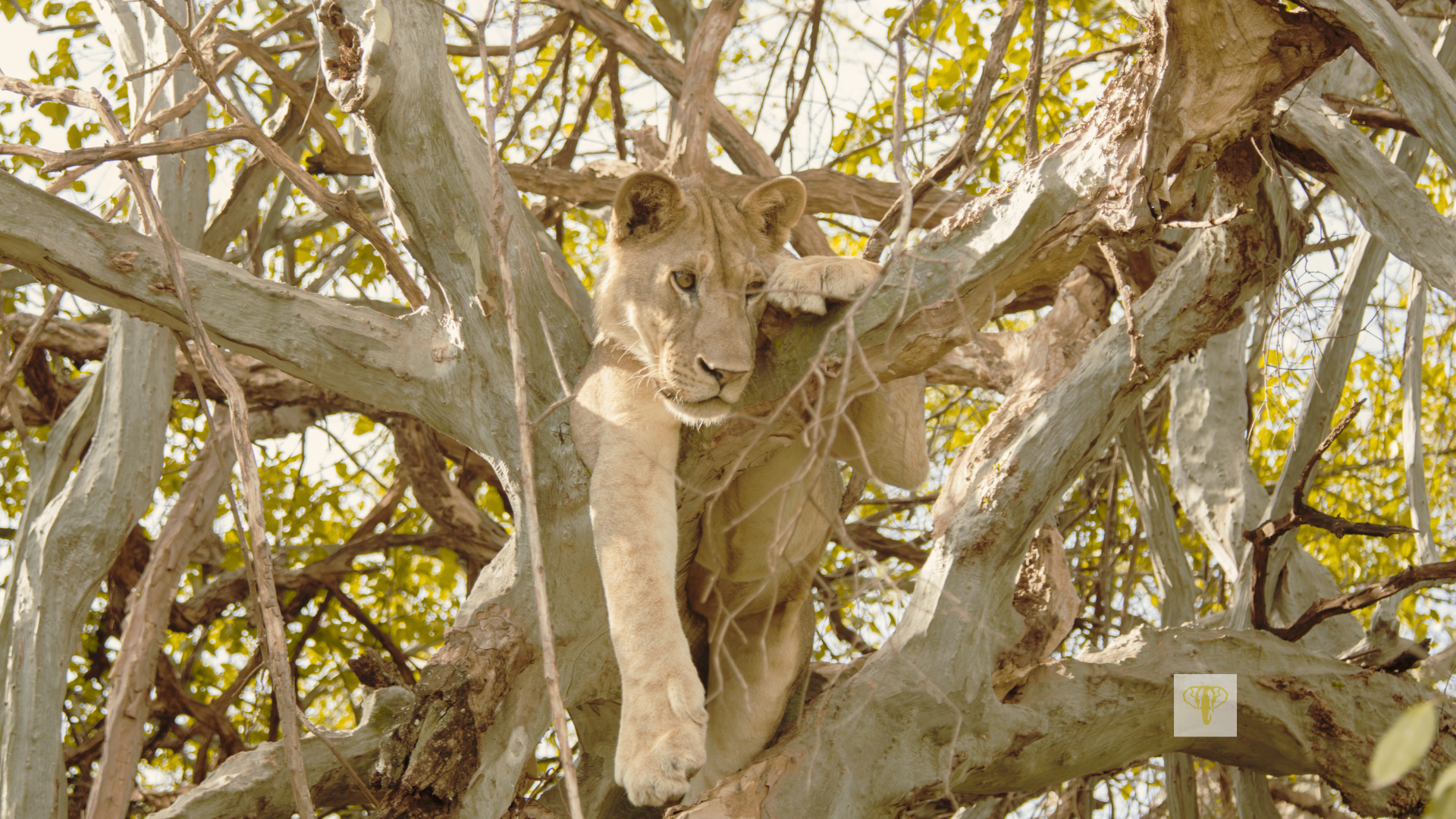
Character A perfectly balanced beginner's itinerary with no extremely long travel days; focus on elephants and craters.
Typical daily logic
- Day 1: Arrival Arusha
- Day 2: Tarangire National Park (Elephants & Baobabs)
- Day 2: Ngorongoro Crater Safari (Big Five Chance)
- Day 4: Lake Manyara (Groundwater Forest/Lions) – Return to Arusha
You can find all information about this Northern Tanzania safari here.
4-Day Safari in Tanzania: Serengeti & Ngorongoro
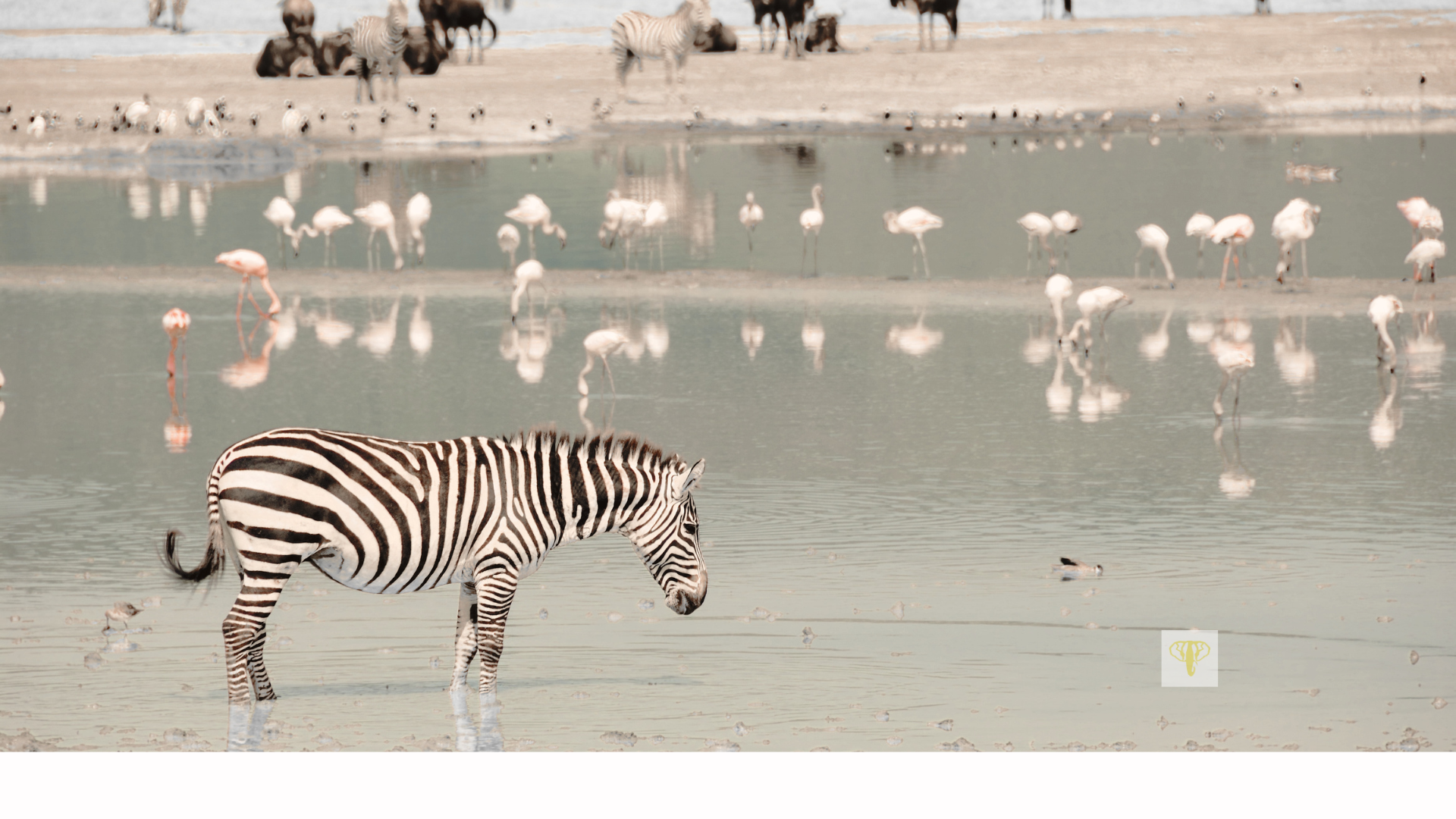
Character Focus on the two most famous highlights; requires patience for the drive to and from the Serengeti.
Typical daily logic
- Day 1: Arrival Arusha
- Day 2: Long drive to the Serengeti – first game drive in the afternoon
- Day 3: Serengeti – Drive to the Ngorongoro Highlands
- Day 4: Safari in the Ngorongoro Crater – Return to Arusha
All information about this safari can be found here.
4-Day Safari in Tanzania: Ndutu & Calving Season
Character Special tour from December through March to see the wildebeest births in the Ndutu region (Southern Serengeti).
Typical daily logic
- Day 1: Arusha – Serengeti National Park
- Day 2: Southern Serengeti and Ndutu Region (calving season)
- Day 3: Lake Ndutu and the Ngorongoro Crater Rim
- Day 4: Safari in the Ngorongoro Crater – Return to Arusha
All information about this safari during calving season can be found here.
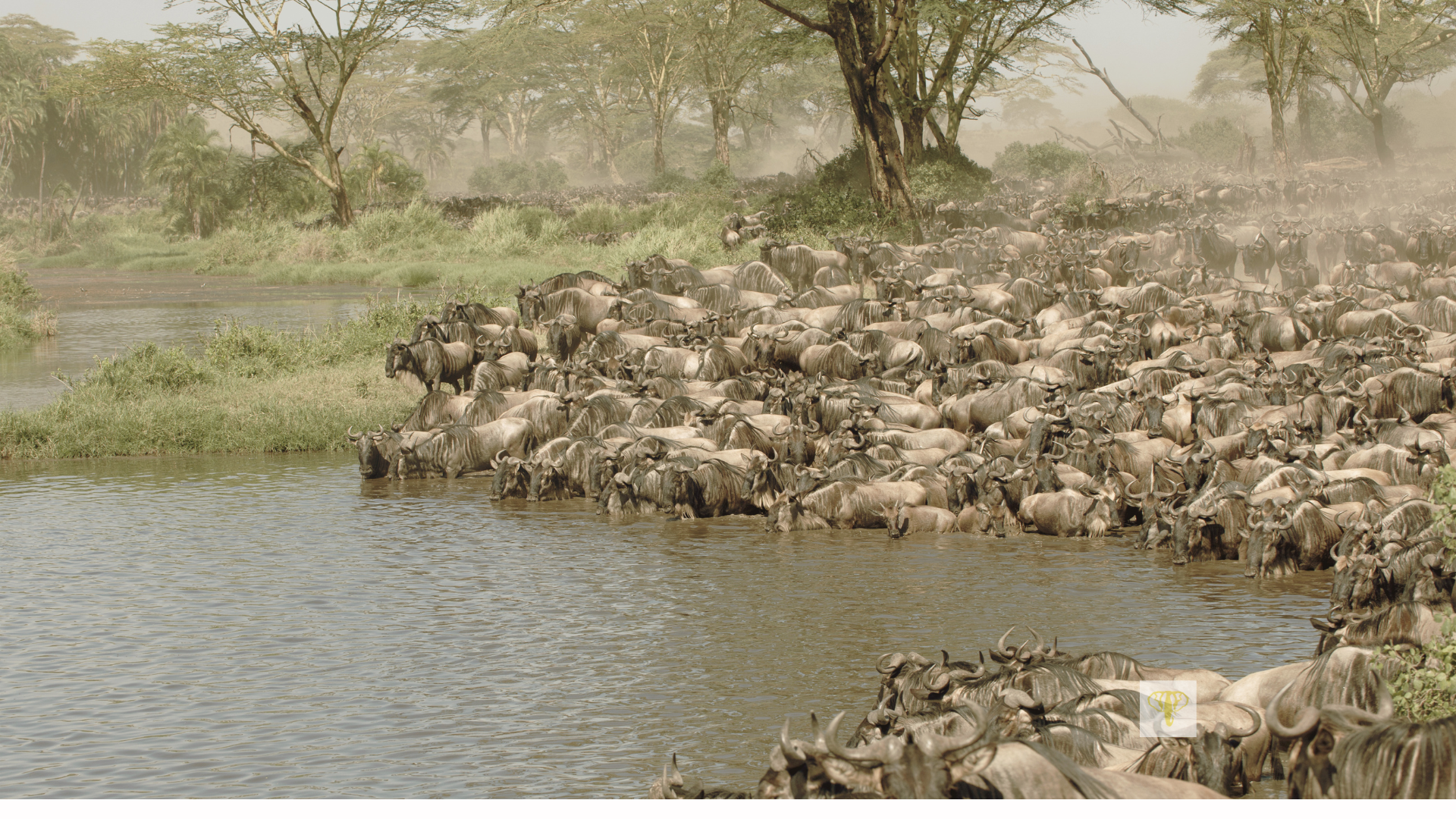
4-Day Safari in Tanzania: Western Corridor Migration
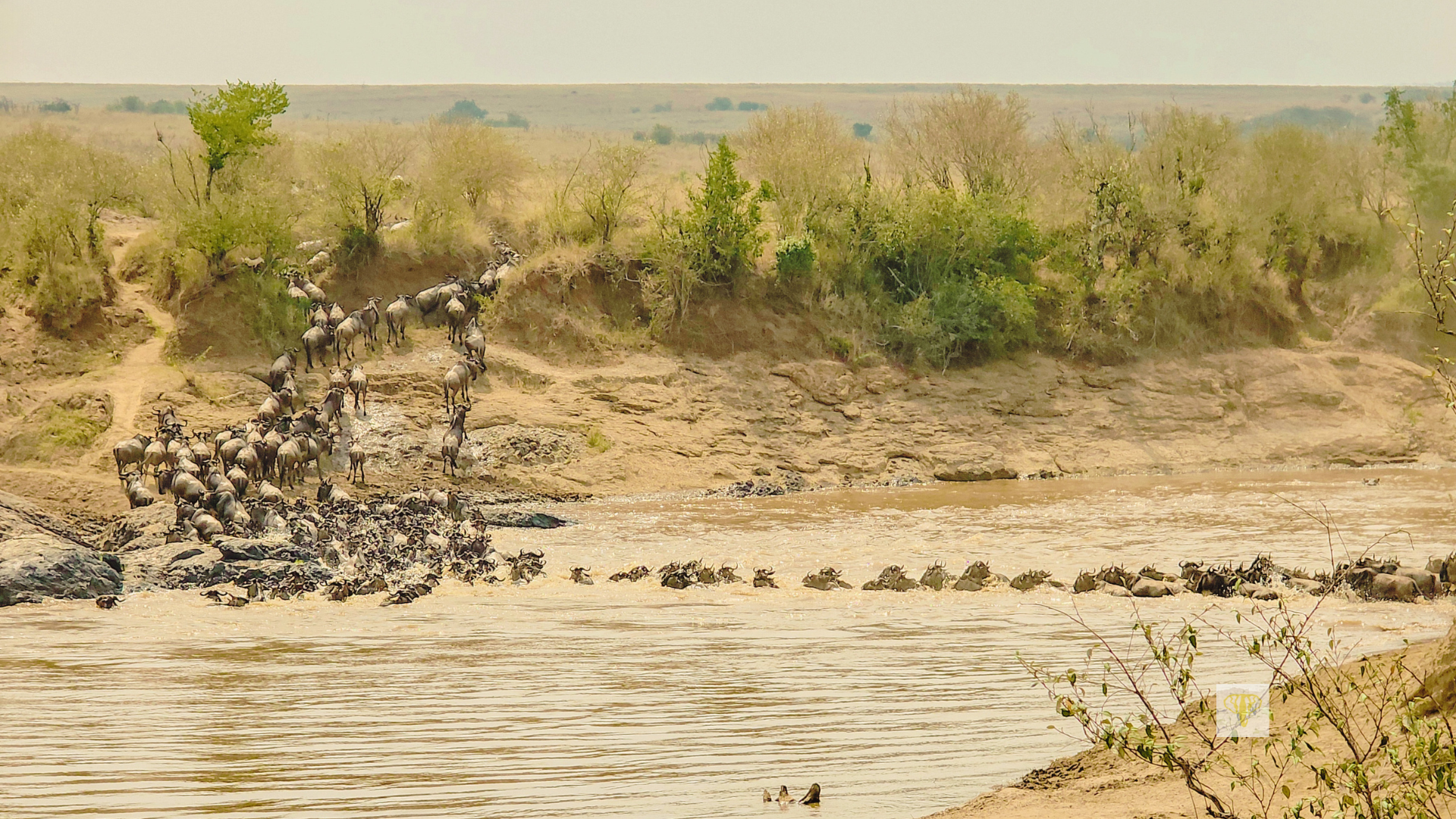
Character Special itinerary for May–June to observe the migration on the Grumeti River (crocodiles).
Typical daily logic
- Day 1: Arusha – Central Serengeti
- Day 2: Central Serengeti – Western Corridor (Migration)
- Day 3: Central Serengeti – Ngorongoro Crater Rim
- Day 4: Safari in the Ngorongoro Crater – Return to Arusha
4-Day Safari in Tanzania: Western Corridor Migration
Learn more about this safari here
4-Day Safari in Tanzania: Manyara, Serengeti, and Ngorongoro
Character A very tight itinerary (“Best of”) that packs in many highlights in a short amount of time; starting from Moshi.
Typical daily logic
- Day 1: Moshi – Lake Manyara
- Day 2: Lake Manyara – Serengeti (via Olduvai)
- Day 3: Serengeti – Drive to the Ngorongoro Highlands
- Day 4: Safari in the Ngorongoro Crater – Return to Arusha
You can find all the information about this exciting safari here.
4-Day Tanzania Safari: Tarangire, Serengeti, Ngorongoro & Lake Manyara
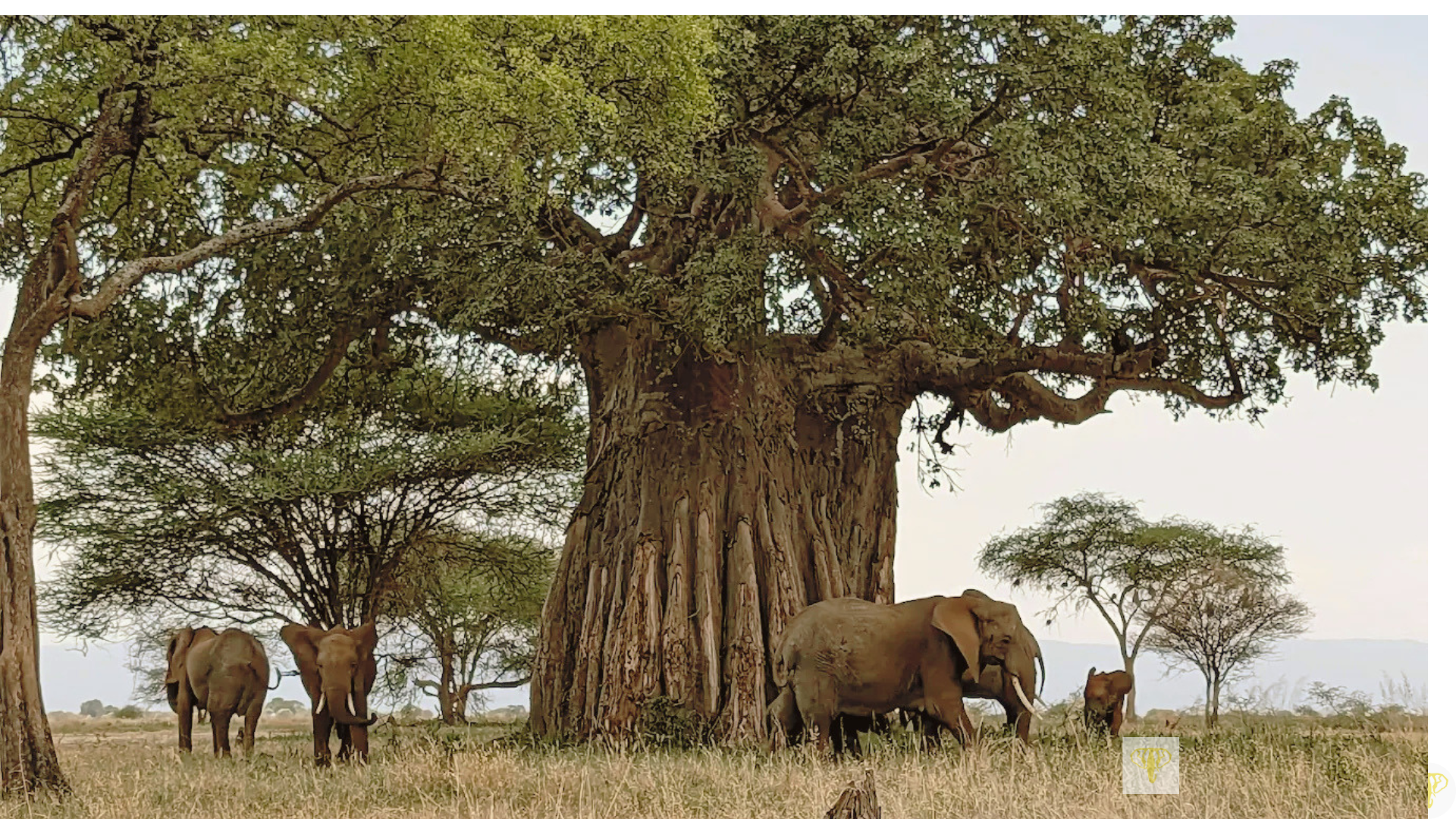
Character The “classic” route with three parks. The scenery is extremely varied, but there’s a high volume of traffic.
Typical daily logic
- Day 1: Arusha – Tarangire National Park
- Day 2: Drive to the Serengeti
- Day 3: Morning Safari in the Serengeti – Transfer to Ngorongoro
- Day 4: Safari in Ngorongoro Crater – Return to Arusha
All information about this safari in northern Tanzania can be found here.
4-Day Luxury Safari in Tanzania
Character High-quality accommodations and exclusive logistics along the classic Northern Route.
Typical daily logic
- Day 1: Arusha – Tarangire
- Day 2: Tarangire – Drive to the Serengeti
- Day 3: Serengeti – Olduvai Gorge – Ngorongoro
- Day 4: Ngorongoro – Arusha
All information on this luxury safari can be found here.
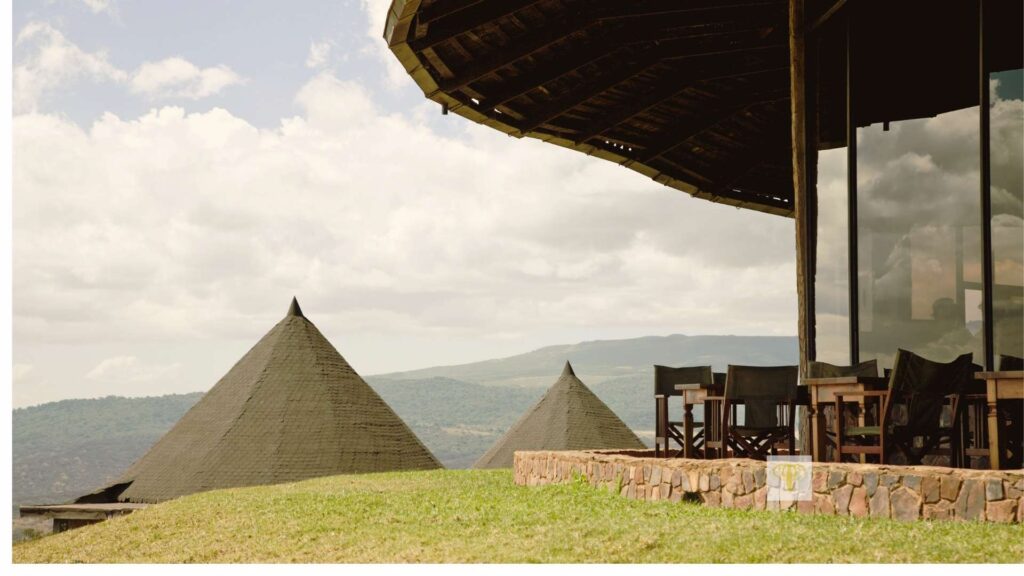
4-Day Safari Itineraries from Zanzibar and Dar es Salaam
4-Day Fly-In Luxury Safari in Tanzania: Experience the Serengeti
Character: Premium option. Flying directly into the park saves approximately 12 hours of car transfer. Focus: Serengeti only.
Typical daily logic:
- Day 1: Flight Zanzibar – Serengeti & First Game Drive
- Day 2: Full-day safari (following the migration)
- Day 3: Full-day safari & Big Five search
- Day 4: Morning game drive & return flight to Zanzibar
Baggage tag: Fly-in flights often have a maximum baggage allowance of 15-20 kg in soft travel bags. Suitcases are usually not allowed on small aircraft.
All information about this North Tanzania safari from Zanzibar can be found Here .
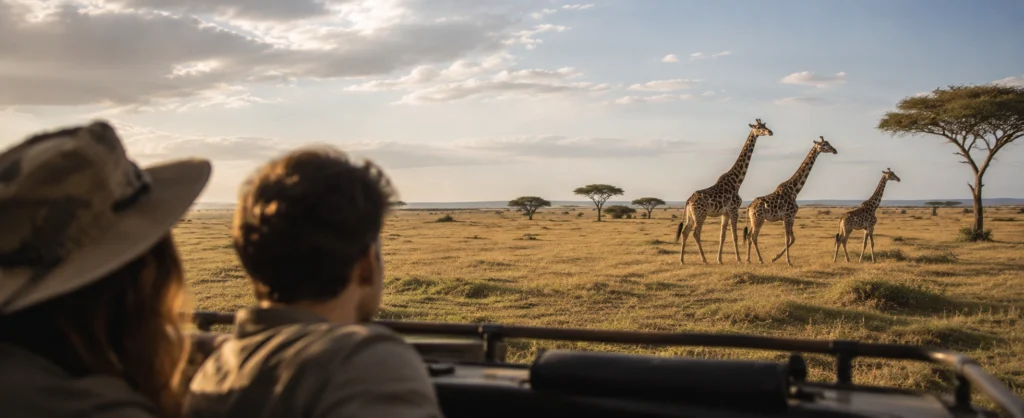
4-Day Safari in Tanzania Departing from Zanzibar
Character The perfect combination of beach and safari. Flight to the Serengeti, return trip after visiting the crater.
Typical daily logic
- Day 1: Flight from Zanzibar to the Serengeti
- Day 2: Full-Day Safari in Serengeti National Park
- Day 3: Safari in the Ngorongoro Crater
- Day 4: Last Game Drive and Return Flight
Luggage Notice: 15-20 kg in soft rice bags
All information on this safari from Zanzibar can be found here.
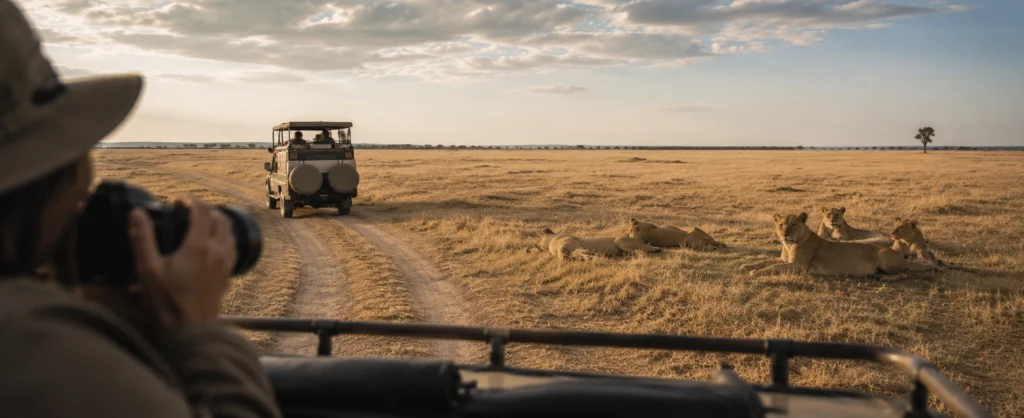
4-Day Safari in Tanzania Departing from Zanzibar
Character The perfect combination of beach and safari. Flight to the Serengeti, return trip after visiting the crater.
Typical daily logic
- Day 1: Flight from Zanzibar to the Serengeti
- Day 2: Full-Day Safari in Serengeti National Park
- Day 3: Safari in the Ngorongoro Crater
- Day 4: Last Game Drive and Return Flight
Luggage Notice: 15-20 kg in soft rice bags
All information on this safari from Zanzibar can be found here.
Customer testimonial
“Individual travel without the stress of online comparisons
We had a 5-day safari in Tanzania and are still absolutely thrilled. Everything was excellently organized and well thought out, from the airport pick-up to the final transfer back to the airport after the safari.
Safari Tanzania saved us hours of comparing providers online. They put together a customized trip, matched us with the best local operator, and ensured seamless organization through quick WhatsApp communication. More anticipation, less stress.
Hakan Evcek, a customer from Darmstadt


Which 4-day safari best suits you objectively? (2 Parks vs. 3 Parks vs. Fly-in)
1) 3 Parks in 4 Days (The Classic: Tarangire, Serengeti, Ngorongoro)
- Advantages: You'll see the greatest possible variety: elephant parks, endless plains (the Serengeti), and the crater.
- Disadvantages On Days 2 and 3, you’ll spend a lot of time in the vehicle traveling between locations (“transit”). The time available for in-depth observation at any one location is limited.
- For whom: First-time visitors who “want to see everything” and accept car rides as part of the experience.
2) 2 Parks / Regions in 4 Days (At a Leisurely Pace)
- Advantages: Fewer hours on the road, more hours with the animals. You can spend more time observing the animals instead of just “checking them off the list.”
- Disadvantages If you skip the Serengeti, you'll miss its iconic endless plains.
- For whom: Photographers, families, and those who want to avoid the hustle and bustle.
3) Fly-in (Maximum Parking Time)
- Advantages: You'll save yourself the long round trip (about 6–7 hours each way) from Arusha to the Serengeti. You'll arrive right in the heart of the action.
- Disadvantages Higher price due to flight costs; strict baggage limits.
- For whom: Travelers departing from Zanzibar or budget-conscious guests who want to devote 100% of their time to wildlife viewing.
Realistic Driving Times & Trade-offs
Distances in Tanzania are often underestimated. Here are some rough estimates (subject to change, depending on road conditions and traffic):
- Arusha to Tarangire: approx. 2-3 hours (asphalt).
- Arusha to Ngorongoro Gate About 3 hours.
- Arusha → Serengeti (Naabi Hill Gate): About 6 hours (travel time only, not including game viewing).
- Serengeti to Ngorongoro Crater About 3–4 hours (dusty dirt road).
- Dar es Salaam → Selous (Nyerere): About 5–6 hours (some parts are challenging).
- Dar es Salaam to Mikumi: About 4–5 hours (heavy traffic is possible).
What do you gain – what do you lose?
If you visit the Serengeti by car (road safari) over 4 days, you’ll “pay the price” for visiting the most famous park with two long days of driving. If you skip that (and choose Tarangire or Manyara, for example), you’ll have a more relaxing trip, but you won’t see the endless plains of the migration.

What animals do you see in 4 days? (Expectations & Opportunities)
Big Five – how realistic is a complete fulfillment?
In 4 days, especially when including the Ngorongoro Crater, statistically speaking, the chances of seeing lions, elephants, and buffalo are very good.
- Rhinoceros Possible and frequently observed in the crater, but never guaranteed.
- Leopards: Requires luck and patience (Serengeti/Tarangire), which are often hard to come by in short time frames.
The Great Migration
The “Great Migration” is a seasonal phenomenon.
- December-March High chances of sightings in the Southern Serengeti/Ndutu.
- May–June: Great opportunities in the Western Corridor.
- July-Oct Migration often takes place in the far north (Kogatende)—it’s virtually impossible to reach by car from Arusha in 4 days (too far), so flying in is a must.
Best time to travel for a 4-day safari in Tanzania (dry season vs. rainy season)
Dry Season (June through October)
- Advantage Vegetation is sparse, animals gather at waterholes (Tarangire) and rivers. Best visibility.
- Disadvantage Peak season—parks and accommodations are more crowded, and prices tend to be higher.
Green Season (November - May)
- Advantage Emerald-green landscapes, plenty of young animals (calving in January/February), fantastic light for photos, less dust.
- Disadvantage Rain risk (mostly showers), some paths more difficult to pass.
Aspects of Photography
In 4 days, you won't have much time for complex lighting setups. The dry season offers “reliable” sightings, while the green season provides more dramatic backdrops and cloudy skies, which make photos more exciting than a plain blue sky.
Costs & Prices: What Drives the Price of a 4-Day Tanzania Safari?
Even without giving concrete numbers, the cost logic helps with comparison:
- Parking fees: The Ngorongoro Crater charges extremely high fees per vehicle. Tours that don't include the crater are cheaper, but you'll miss out on a highlight.
- Accommodation category: “Inside Park” is often more expensive than “Outside Park.” Tented camps (glamping) are often more expensive than permanent lodges because they are located in more exclusive areas.
- Private vs. Group: The fixed costs for the Jeep and guide are divided by the number of fellow travelers. With two people, it is more expensive per person than with four.
- Flights: Fly-in safaris involve expensive bush plane tickets, but they save vacation days.
- Season: Christmas/New Year's and July/August often have peak season surcharges.
Here's how to compare offers correctly:
- Are crater fees included?
- Are domestic flights included in the price or charged separately?
- Is the vehicle for exclusive (private) use?
- Are all meals (full board) included?
Accommodations for 4 days: Camping, lodge, tented camp
Accommodation type | Comfort | Atmosphere | Location & Pricing Logic |
Camping | Simple (sleeping bag, mattress) | Pure adventure, campfire | Mostly public campgrounds (shared restroom facilities). The most affordable option. |
Lodge | Medium to High (solid walls) | Hotel-style, often with a pool | Often found on the edge of parks or in permanent facilities. Solid mid-range to luxury. |
Tented Camp | Mid to Luxury | Safari vibe (canvas walls, real bed) | Often located in the middle of the wilderness (“bush feeling”). Prices are often on the higher end. |
Note: A place to stay in the park It often saves time getting to the gate in the morning, but is usually more expensive (design fees).
Starting points & Logistics: Arusha, Kilimanjaro Airport (JRO), Moshi, Zanzibar, Dar es Salaam
Where to start?
- Arusha/JRO: The standard for all northern routes (Serengeti, Tarangire).
- Moshi: It's possible, but it adds about 1–1.5 hours of travel time each way to Arusha.
- Zanzibar: Perfect for fly-in tours. If you're starting the tour by car, you'll need to book a flight to Arusha/JRO.
- Dar es Salaam (DAR): The Gateway to the South (Nyerere/Selous, Mikumi). From here, the northern parks are best reached by plane.
Inclusive / Exclusive (typical) - transparent at a glance
Typically including | Typically not included |
Private 4x4 Safari Vehicle (Pop-up Roof) | International flights |
Safari Guide (German-speaking, subject to availability) | Visa for Tanzania |
All park and conservation fees | Travel insurance |
Overnight stays & meals (full board on safari) | Tips for the guide |
Mineral water during game drives | Alcoholic Beverages & Soft Drinks in Lodges |
Domestic flights (only if explicitly booked as a fly-in package) | Personal Expenses / Souvenirs |
Frequently Asked Questions
Is 4 days enough for the Serengeti?
Yes, it's doable, but it's quite demanding. We often recommend flying one way to make up for the 6-hour drive from Arusha.
Can I see the Big Five?
The chances are very good, especially if you combine a visit to the Ngorongoro Crater with the Serengeti or Tarangire. However, spotting rhinos and leopards is a matter of luck.
Is it possible to go on a 4-day safari from Zanzibar?
Absolutely. By plane (about 1 hour to Arusha or the Serengeti), this is a very popular combination.
What is the difference between Nyerere (Selous) and Serengeti?
The Serengeti is open savanna (endless expanse). Nyerere (Selous) is bushier and wilder, offers boat safaris, and has fewer tourists—ideal for adventurers.
What vaccinations do I need?
Please consult a tropical medicine specialist. Yellow fever is often a concern for travelers arriving from high-risk areas (or with a layover of more than 12 hours). Malaria prophylaxis is usually recommended.
How much should you tip the guide?
The standard amount is about 15–20 USD per day per group (not per person), depending on how satisfied you are.
What do I need to keep in mind for the flight to the bush?
A maximum of 15–20 kg of luggage in soft bags (no hard-shell suitcases!), as storage space is limited in the small Cessnas.
Are day trips suitable for children?
Yes, private safaris are flexible. For families with children, we recommend Tour 1 (less travel time) rather than the long drive to the Serengeti.
When is the best time to migrate?
It takes 4 days to reach the migration from Arusha; the best times to visit are December through March (south/Ndutu) or May/June (west). From July through October, the migration is often too far north for a short road safari.
Can I charge my cell phone?
Yes, our Jeeps usually have electrical outlets and USB ports. There are almost always charging options available at the accommodations (sometimes with time limits when the generator is running).
Plan your own trip to Tanzania
Plan your own trip to Tanzania
Get personal advice now

After this call, you have…
- a list of all trips that fit your budget and availability,
- Bookable tours with fixed prices
- and answers to your open questions
- ... and all in under 30 minutes.