
6-Day Arusha National Park, Tarangire, Lake Manyara, Serengeti & Ngorongoro Crater
Six days right across the north, from the Momella Lakes to the crater floor, with two full days in the Serengeti and five nights.
6 days
Up to five parks, starting in Arusha National Park.
Six days begin in Arusha National Park, at the foot of Mount Meru. From there you travel via Tarangire into the Serengeti and finally to the Ngorongoro Crater. Here too you decide: Lake Manyara and two Serengeti days, or no Manyara and three Serengeti days instead.
In short
Two overland routes, both with Arusha National Park as the first day. Then come Tarangire, the Serengeti and, on the last day, the Ngorongoro Crater, either with Lake Manyara and two Serengeti days or without Manyara and with three. Both routes are privately guided, and Zanzibar can be added as the start or end point.
01 At a glance
02 Key points
The route with Lake Manyara visits all five major protected areas in the north. The other makes do with four and has more Serengeti in return.
Two days with Lake Manyara as a stop on the way, or three days in a row without it.
The extra day compared with the 5-day safari belongs to Arusha National Park. It lies just outside the city, so your first safari day begins without a long drive.
Six days right across the north, from the Momella Lakes to the crater floor, with two full days in the Serengeti and five nights.
Six days with the focus on the Serengeti: three days in a row in the park, framed by Arusha National Park, Tarangire and the Ngorongoro Crater.
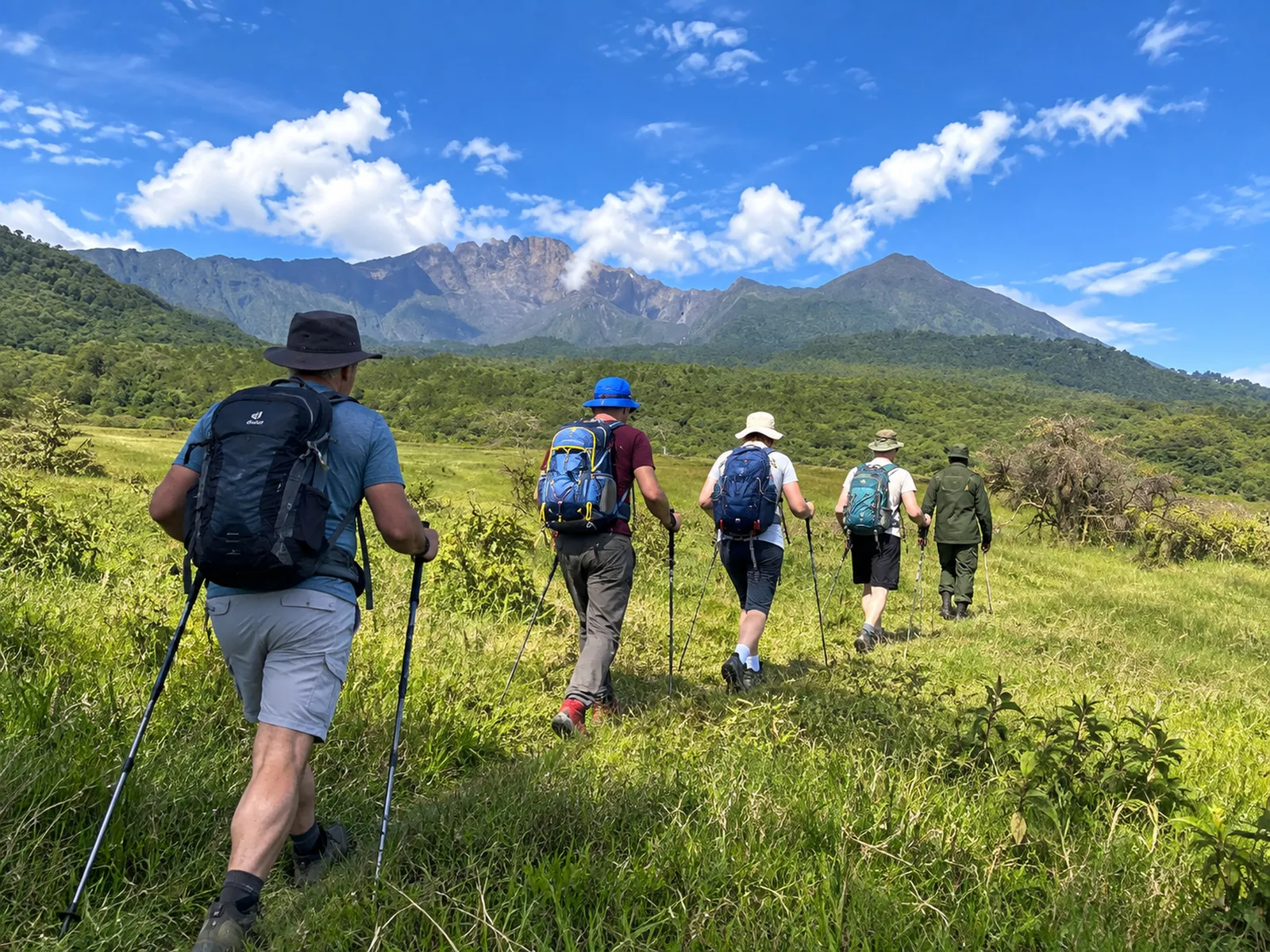
Both routes begin where many safaris simply drive past: in Arusha National Park, around 35 minutes from the city. Mountain forest, lakes and Mount Meru are the counterpoint to the savannah that follows. If you wish, you can go on a walking safari there with a ranger.
From the second day you follow the familiar loop via Tarangire and the Serengeti to the crater. With Lake Manyara as the third stop, that leaves two Serengeti days; without it, there are three. The catch with the second variant: the drive from Tarangire to Seronera is done in one go, a good five hours.
You book through us, and your safari is run by a licensed partner on the ground. On both routes, the vehicle and guide are there for your travel group alone.
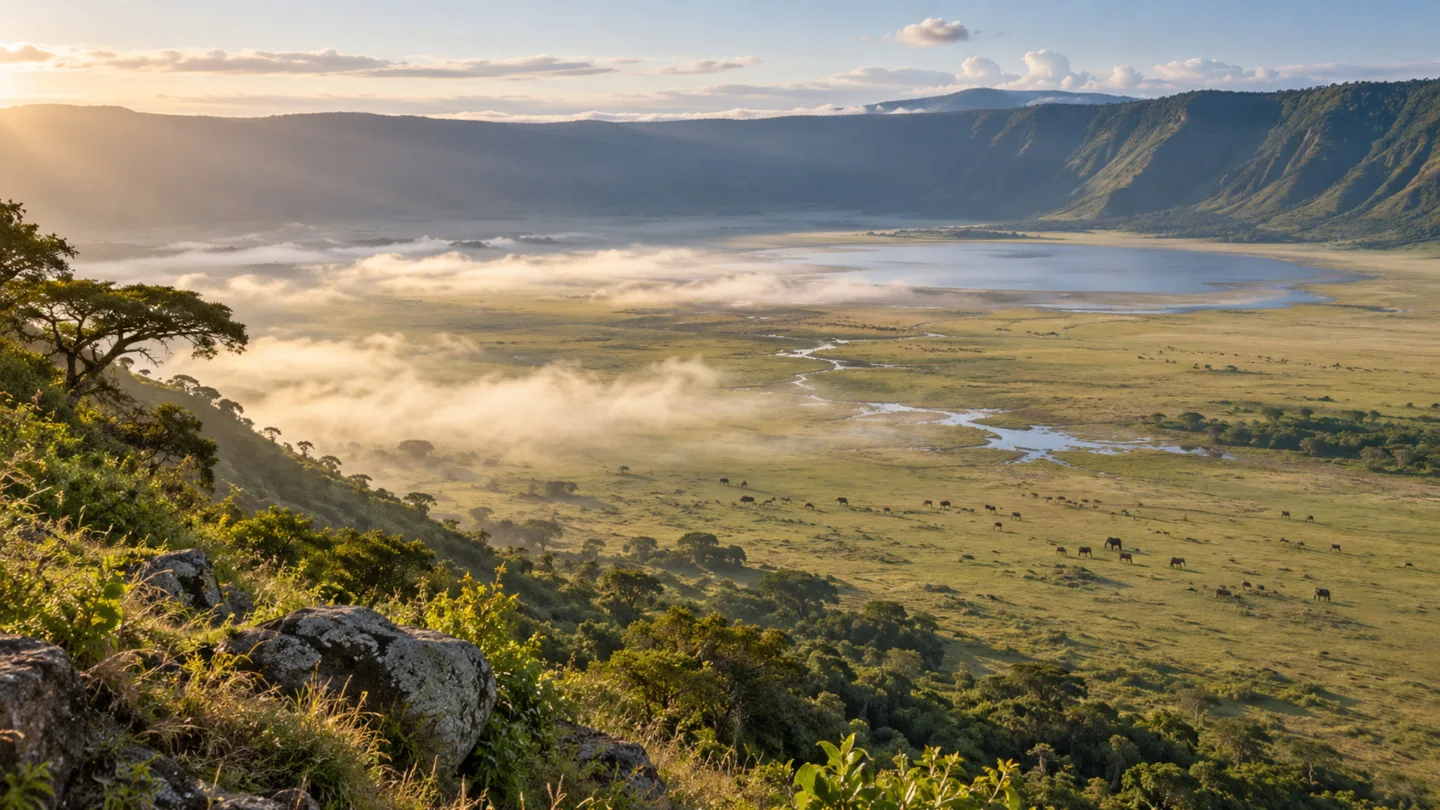
The crater is only the best-known part of a much larger protected area. The Ngorongoro Conservation Area has existed since 1959, and unlike in the national parks, people and wildlife share the land here. Around the crater, the Maasai move across the highlands with their goats.
In the far south of the Conservation Area lies Ndutu. From late December into March, the herds of the Great Migration gather there, and thousands of calves are born on the grassy plains every day. Our fixed routes, however, do not go to Ndutu but through the highlands into the central Serengeti.
On both 6-day routes you therefore cross the Conservation Area twice: on the way into the Serengeti and on the last day, when you head down from the crater rim into the crater itself. The area has been a UNESCO World Heritage Site since 1979.
For wildlife viewing in Tarangire and the Serengeti, the dry seasons are best: June to October, and late December to February. Arusha National Park comes with an extra rule: your best chance of a clear view of Kilimanjaro from there is in December, January and February.
It rains most in April and May. The parks are green and quiet then, although some camps close during these weeks. Good to know: in Tanzania, more rain usually means heavy showers, rarely whole days of rain.
Think safari, and you pack shorts. On the crater rim, though, early-morning temperatures are often around 5 °C, because the rim lies at over 2,200 metres. At midday on the savannah in the dry season, by contrast, it is 25 to 27 °C.
So: dress in layers. One light layer, one warm one and one against the wind, and you peel them off as the morning goes on. With the roof open, the safari vehicle is draughtier in the morning than you might think, so a woolly hat does no harm.
05 Fact check
Myth
„Arusha National Park is just a transit stop.“
On both 6-day routes, the park gets a travel day of its own, with a game drive and, if you wish, a walking safari.
Myth
„Long safaris are mostly driving days.“
The variant without Lake Manyara spends three of its six days consecutively in Serengeti National Park.
Yes. On the route with Lake Manyara you have two Serengeti days, on the other three in a row. That is not enough for a detour to the river crossings in the north; for that you need a route of your own with more days.
If you want to see as much as possible, take the route with Lake Manyara: five parks in six days and shorter stages. If you would rather immerse yourself more deeply in the Serengeti, take the route with three days there, and one long driving day as the price. Both include Arusha National Park and the crater.
Quite possibly. The crater on the last day is the best chance of a rhino in the north, and two or three Serengeti days give leopards more opportunities to show themselves. With wild animals, though, nobody can promise it.
Yes. With only a short drive to get there, Arusha National Park makes a gentle start, and on the route with Lake Manyara the stages stay manageable. Do expect early starts and cool mornings in the highlands, though. We will check whether any accommodation on your route has a minimum age.
Yes, with both routes. The flight from Zanzibar to Arusha takes around 80 minutes, and the safari begins there in Arusha National Park. After the crater, a flight can take you back to the island if you wish; the five nights stay the same.
Six days is almost a week. In the trip planner you can extend your time in the Serengeti or add beach days, and the price is recalculated instantly.
Can't decide between Manyara and more Serengeti? Tell us when you plan to travel, and we will tell you which works better in that month. Our reply arrives the same day, usually even sooner via WhatsApp.

Prefer to talk? Dominic Dreiner is happy to help.
Alle Preise sind unverbindliche Richtpreise pro Person bei zwei gemeinsam reisenden Personen, einschließlich der in der Leistungsübersicht genannten Leistungen und ohne Flüge nach Tansania. Bei größeren Gruppen sinkt der Preis pro Person. Der endgültige Preis richtet sich nach Reisezeitraum, Gruppengröße, gewählten Unterkünften und Verfügbarkeit; er wird Ihnen im individuellen Angebot verbindlich genannt. Angebote sind bis zur abschließenden Verfügbarkeitsprüfung freibleibend. Es gelten unsere AGB.