7-Day Tanzania Safari: Route Comparison, Driving Times, Best Time to Visit, Accommodations & Cost Breakdown
Overview
Seven days is the ideal length of time for a safari in Tanzania if you want to see the famous Northern Circuit without feeling rushed. This itinerary allows you not only to search for the “Big Five” in the Ngorongoro Crater, but also to delve deep into the Serengeti—often as far north as the Great Migration. Unlike shorter trips, you’ll spend more time on game drives and less time on the access roads.
Key Takeaways
- The “Sweet Spot”: A 7-day trip offers the best balance between travel time and actual wildlife viewing.
- All 4 icons are possible: Tarangire, Lake Manyara, the Serengeti, and Ngorongoro can easily be visited in a week.
- Serengeti Depths Unlike on short trips, you'll spend 2–3 nights in the Serengeti here, which greatly increases your chances of seeing lion prides and the migration.
- Migration can be planned: With 7 days, you can also reach more remote areas (e.g., the Mara River in the north) without compromising the rest of the itinerary.
- Travel times: It's a long way from Arusha to the Serengeti. A fly-in start (Tour 8) saves you a full day of driving.
- Seasonal Logic: Sightings are easiest during the dry season (June–October); the green season (November–May) offers dramatic landscapes and less dust.

7-Day Safari Itinerary from Arusha and Moshi (Kilimanjaro Airport)
Most 7-day safaris begin and end in Arusha (near Kilimanjaro Airport, JRO), the gateway to the north.
Classic 7-Day Tanzania Safari

Character The perfect “Best of” mix for first-time visitors who want to see all four major parks plus cultural highlights.
Typical daily logic
- Day 1: Arrival Arusha
- Day 2: Tarangire National Park (Elephants & Baobabs)
- Day 3: Transfer to the Serengeti
- Day 4: Central Serengeti and Drive to Ngorongoro Crater
- Day 5: Ngorongoro Crater and Onward Journey to Lake Manyara
- Day 6: Lake Manyara (tree lions) & Maasai village
- Day 7: Return to Arusha
All information about this safari in northern Tanzania can be found here.
7-Day Safari in Tanzania - Budget Camping Adventure

Character The same route as the classic ones, but staying close to nature at campsites—ideal for adventurers and budget-conscious travelers.
Typical daily logic
- Day 1: Arrival JRO / Transfer Arusha
- Day 2: Arusha – Tarangire
- Day 3: Tarangire – Drive to the Serengeti
- Day 4: Full-Day Serengeti Safari
- Day 5: Serengeti – Ngorongoro Crater
- Day 6: Ngorongoro Crater – Return to Arusha
- Day 7: Departure
All information about this camping safari can be found here.
7-Day Tanzania Safari: Great Migration

Character Optimized for the Great Migration (July–October), with a focus on the Northern Serengeti and the Mara River.
Typical daily logic
- Day 1: Arrival Arusha
- Day 2: Tarangire National Park
- Day 3: Drive to the Central Serengeti
- Day 4: From Central Serengeti to Northern Serengeti (Kogatende)
- Day 5: From the Serengeti to the Ngorongoro Crater
- Day 6: Ngorongoro Crater
- Day 7: Lake Manyara and Return
All information about this safari during the Great Migration can be found here. here.
7-Day Safari in Tanzania - Mid-Range Tour

Character A well-rounded itinerary featuring solid mid-range lodges that strike a balance between comfort and the safari experience.
Typical daily logic
- Day 1: Arrival Arusha
- Day 2: Tarangire
- Day 3: Drive to the Serengeti with a game drive
- Day 4: Full-Day Serengeti Safari
- Day 5: From the Serengeti to the Ngorongoro Crater
- Day 6: Lake Manyara
- Day 7: Return and Departure
More information about this mid-range safari can be found here.
7-Day Safari in Tanzania - Serena Experience

Character Focus on the renowned Serena Lodge chain—consistently high standards and prime locations within the parks.
Typical daily logic
- Day 1: Arrival JRO
- Day 2: Tarangire
- Day 3: Drive to the Serengeti
- Day 4: Full Day in the Serengeti
- Day 5: Central Serengeti – Ngorongoro Crater Rim
- Day 6: Ngorongoro Crater – Arusha
- Day 7: Departure
All information about this Serena safari can be found here.
7-Day Tanzania Safari - Great Migration

Character Maximum flexibility in the Serengeti (west, north, or central, depending on animal movements) with upscale accommodations.
Typical daily logic
- Day 1: Arrival JRO / Transfer Arusha
- Day 2: Tarangire
- Day 3: Arusha – Central Serengeti
- Day 4: Western Corridor / Grumeti (seasonal)
- Day 5: Northern Serengeti / Mara River (seasonal)
- Day 6: Central Serengeti – Ngorongoro Crater Rim
- Day 7: Ngorongoro Crater – Departure
All information on this luxury safari can be found here.
7-Day Safari - National Parks of Northern Tanzania

Character The classic “4 Parks in 7 Days” loop at a relaxed pace.
Typical daily logic
- Day 1: Arrival JRO / Transfer Arusha
- Day 2: Tarangire
- Day 3: Lake Manyara
- Day 4: Arrival & Serengeti Safari
- Day 5: Full-Day Safari in Serengeti National Park
- Day 6: Serengeti – Ngorongoro Highlands
- Day 7: Ngorongoro Crater – Arusha
All information about this safari in northern Tanzania can be found here.
7-Day Safari in Tanzania - Fly-In Tour

Character Skip the long drive and take a direct flight to the Serengeti—maximize your time with the animals.
Typical daily logic
- Day 1: Flight from Arusha to the Serengeti
- Day 2: Full Day Safari Serengeti
- Day 3: Serengeti Migration Experience
- Day 4: Serengeti – Ngorongoro Highlands
- Day 5: Ngorongoro Crater
- Day 6: Lake Manyara
- Day 7: Tarangire and Return to Arusha
Note (Fly-in): The baggage allowance on regional airlines is usually 15–20 kg in soft-sided travel bags.
All information about this Serena safari can be found here.
7-Day Safari Itineraries from Zanzibar and Dar es Salaam
If you are already in Zanzibar or Dar es Salaam, a 7-day safari is easily possible, but it requires a domestic flight to the starting point in Arusha/Kilimanjaro.
- Logistics: You'll fly to Arusha or Kilimanjaro Airport (JRO) on the morning of Day 1 (or the evening of Day 0).
- Tour Selection: All of the routes listed above can be taken from Zanzibar.
- Return trip: On Day 7, you can often fly directly from Arusha Airport back to Zanzibar (flight time approx. 1 hr 20 min) to continue your beach vacation.
Customer testimonial
“Individual travel without the stress of online comparisons
We had a 5-day safari in Tanzania and are still absolutely thrilled. Everything was excellently organized and well thought out, from the airport pick-up to the final transfer back to the airport after the safari.
Safari Tanzania saved us hours of comparing providers online. They put together a customized trip, matched us with the best local operator, and ensured seamless organization through quick WhatsApp communication. More anticipation, less stress.
Hakan Evcek, a customer from Darmstadt


Which 7-day safari is objectively best for you? (Classic vs. Culture vs. Fly-Out)
1) The Classic: 4 Parks in 7 Days (Tarangire + Manyara + Serengeti + Crater)
You can see it all. The landscape changes every day—from the baobabs in Tarangire to the groundwater forest in Manyara to the open savanna of the Serengeti.
- Advantages: Maximum variety; you won't miss a single highlight; often more affordable, since everything is done by road transfer.
- Disadvantages They change accommodations almost every day. The time spent in the Serengeti is nice, but not very long (usually 2 nights).
- For whom: First-time visitors who want a complete overview of northern Tanzania.
2) The Focus Trip: 3 Parks in 7 Days (More Serengeti)
They sacrifice a smaller park (usually Lake Manyara) in order to stay in the Serengeti for an entire day longer.
- Advantages: A better chance of actually finding the great migration (even if it's far to the north); a more relaxed stalking experience without time pressure.
- Disadvantages You'll see “only” three parks (but you'll explore them thoroughly).
- For whom: Photographers and animal lovers for whom lions, cheetahs, and the trek are more important than “checking off” all the parks.
3) The Time-Savers: Fly-in Combo
They fly one way (usually one-way).
- Advantages: You’ll save yourself the approximately 6–7-hour drive from Arusha/Karatu to the Serengeti Gate (no need for a “Tanzanian massage” on gravel roads). You’ll arrive right in the heart of the action.
- Disadvantages Higher price due to flight costs; strict baggage limits.
- For whom: Travelers who are looking for comfort and want to spend every hour with the animals instead of on transfers.
Realistic Driving Times & Trade-offs
Even on a 7-day trip, you'll spend time on the road. We plan realistically:
- Arusha to Tarangire: approx. 2-3 hours (asphalt).
- Tarangire → Serengeti (Central): Approx. 4–5 hours of actual driving time, plus game drives along the way. This is a long but scenic leg of the journey through the Ngorongoro Highlands.
- Serengeti (Central) → North Serengeti (Kogatende): Approx. 3–4 hours of game drive (important for migration tours).
- Serengeti → Ngorongoro Crater: approx. 3-4 hours.
- What can you win? The long journey to the Serengeti is “worth it” because you'll be staying there for several days.
- What do you stand to lose? If you all When visiting four parks, days that involve changing hotels often mean spending 4–6 hours in the car. Private safaris, however, allow us to take breaks whenever we want.
What animals do you see in 7 days? (Expectations & Opportunities)
The Big Five—Are the Odds Good?
In 7 days, the chances of Lion, Elephant, and Buffalo at nearly 100%.
- Leopard: In the Serengeti (especially the Seronera Valley and Tarangire), this is very likely, since you'll have plenty of time to look for them.
- Rhinoceros Your best chance is the day you spend in the Ngorongoro Crater. That's where the density is highest. There's never a guarantee, but spending 7 days there will maximize your chances.
The Great Animal Migration
With 7 days, we have enough time to search for the herds:
- January–March (calves): Southern Serengeti/Ndutu (easily accessible).
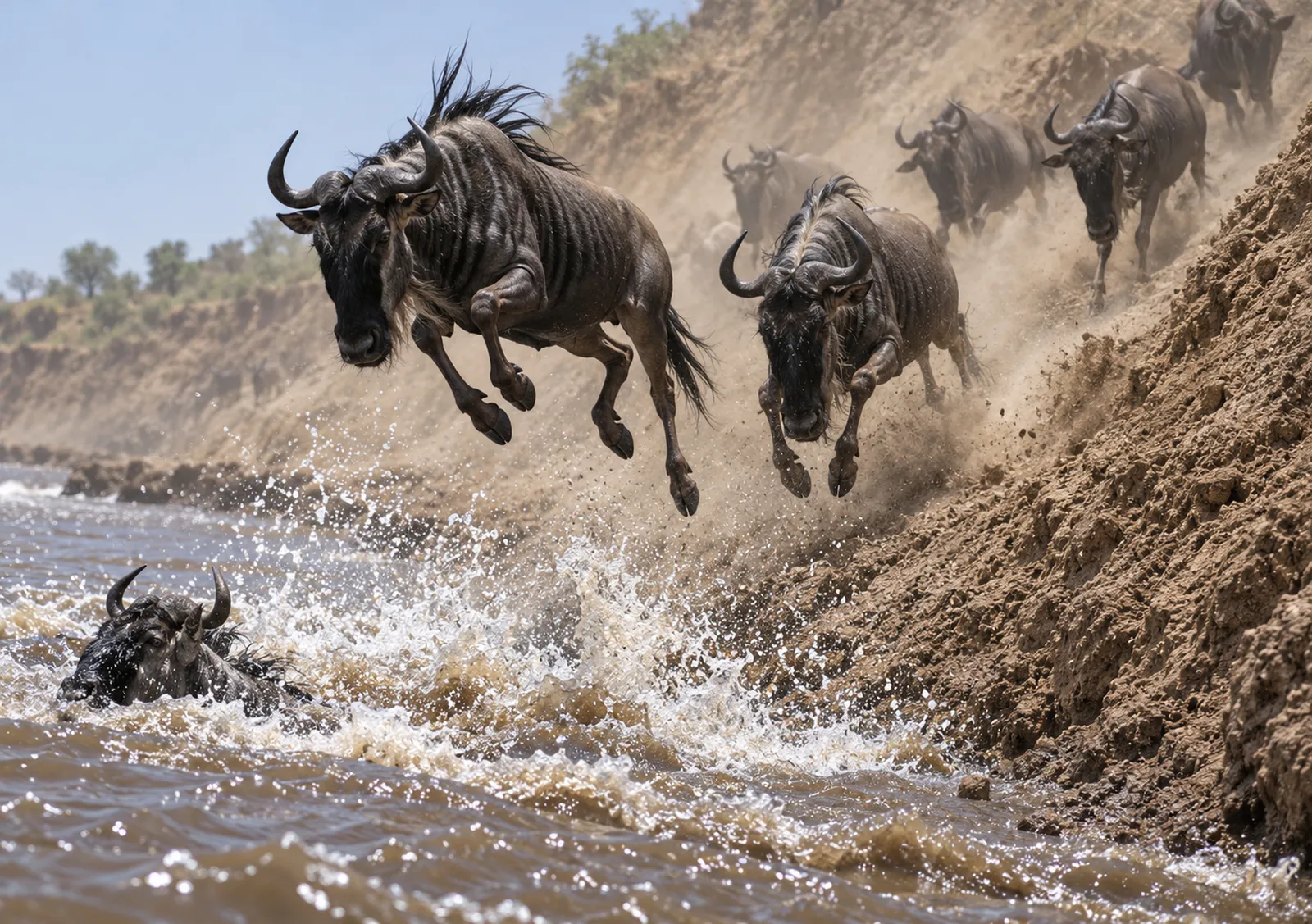
- June–October (river crossings): North/Mara River. To get there, you'll need to take tours like No. 3 or 6, which go all the way north.
- November/May: Central/Western Corridor.

Best time to travel for a 7-day safari in Tanzania (dry season vs. rainy season)
Dry Season (June through October)
- View Excellent. The grass is short, and animals are gathering at watering holes (the Tarangire River!).
- Migration The spectacular river crossings in the north are taking place now.
- Disadvantage Peak season—parks and accommodations are more crowded, and prices tend to be higher.
Green Season (November - May)
- Landscape Emerald green, dramatic clouds, no dust clouds.
- Migration Calving season (Jan/Feb) in the south—an extremely high number of big cat sightings.
- Advantage Fewer visitors, often better prices, and beautiful lighting for photos.
Note on Photography: In 7 days, you'll have enough time for both light windows (morning and evening). Dust protection for cameras is mandatory during the dry season.
Costs & Prices: What Drives the Price of a 7-Day Tanzania Safari?
- Days in the Serengeti: Entrance fees and lodging costs in the Serengeti are higher than in other parks. More days in the Serengeti = a higher trip cost.
- Ngorongoro Crater entrance fee: The fee per vehicle (~295 USD) is a one-time charge.
- Accommodation class The difference between camping (public campsite) and a luxury lodge is the biggest cost driver.
- Season: Easter and November/May are often less expensive than July/August or Christmas.
- Logistics: A fly-in segment increases the price, but saves you a day's worth of Jeep rental and gas (although the flight is usually more expensive).
Here's how to compare offers fairly:
- Is the VAT (18%) Included?
- Are all parking fees (including the expensive crater fee and concession fees for lodges in the park)?
- Is it a real private safari Or are you being refilled?
- Which Lodge Category Is it recorded accurately?

Accommodations for 7 days: Camping, lodge, tented camp
For a 7-day stay, the comfort of your accommodations is important, since you need to relax.
Accommodation type | Comfort & Style | Special feature | Pricing logic |
Camping (e.g., Tour 2) | Sleeping in an igloo tent, sleeping bag, public restrooms | Very close to nature, campfires, a sense of adventure | Most affordable option, since there are no lodge fees |
Tented Camp (Mid-range) | Walk-in tents, real beds, private en-suite bathroom/toilet | “Glamping”—you can hear nature, but you sleep just like you would in a hotel | The best balance of price and safari atmosphere |
Lodge (Permanent structure) | Stone/wood walls, often a pool, large lounge | Feels safer, often offers classic hotel comforts | Priced similarly to tented camps, depending on the location |
Luxury / Serena (e.g., Tour 5) | High-end service, prime location, often a pool with a view | Exclusivity, outstanding food, top-notch guides | Higher price range |
Important: “Inside Park” accommodations (in the heart of the Serengeti) are more expensive than those outside the park (e.g., Karatu), but they save you travel time in the morning.
Inclusive / Exclusive (typical) - transparent at a glance
Typically including | Typically not included |
Private 4x4 Safari Land Cruiser (Pop-up Roof) | International flights |
Professional guide (German-speaking, subject to availability) | Visa for Tanzania |
All park and conservation fees | Travel insurance |
Ngorongoro Crater Entrance Fee | Tips for the guide |
Overnight stays & meals (full board on safari) | Alcoholic Beverages & Soft Drinks in Lodges |
Bottled water in the safari vehicle | Optional Activities (e.g., Hot Air Balloon Safari) |
Domestic flights (only if explicitly mentioned in Tour 8 or similar) | Personal Expenses / Souvenirs |
FAQ - 7-Day Safari in Tanzania
Is 7 days enough for the Great Animal Migration?
Yes. Seven days is ideal. We can plan the route so that we head directly to the corridor where the herds are currently located (Ndutu, Western Corridor, or Mara River).
Can I go to Zanzibar after the safari?
Absolutely. Many guests fly directly from Arusha (ARK) or Kilimanjaro (JRO) to Zanzibar on Day 7. We can tailor the end of the tour to coincide exactly with your departure.
Are day trips suitable for children?
A 7-day trip can be exhausting for very young children because the travel distances are long. For children ages 8–10 and older, it’s usually a great experience.
What about malaria?
Tanzania is a malaria-endemic area. Please consult a tropical medicine specialist in advance. Mosquito nets are provided at the accommodations.
How much is the customary tip?
Tipping is voluntary but customary. A general guideline for the guide is often about 15–20 USD per day per group (not per person); lodges usually have a “tip box” for the entire team.
Plan your own trip to Tanzania
Get personal advice now

After this call, you have…
- a list of all trips that fit your budget and availability,
- Bookable tours with fixed prices
- and answers to your open questions
- ... and all in under 30 minutes.