
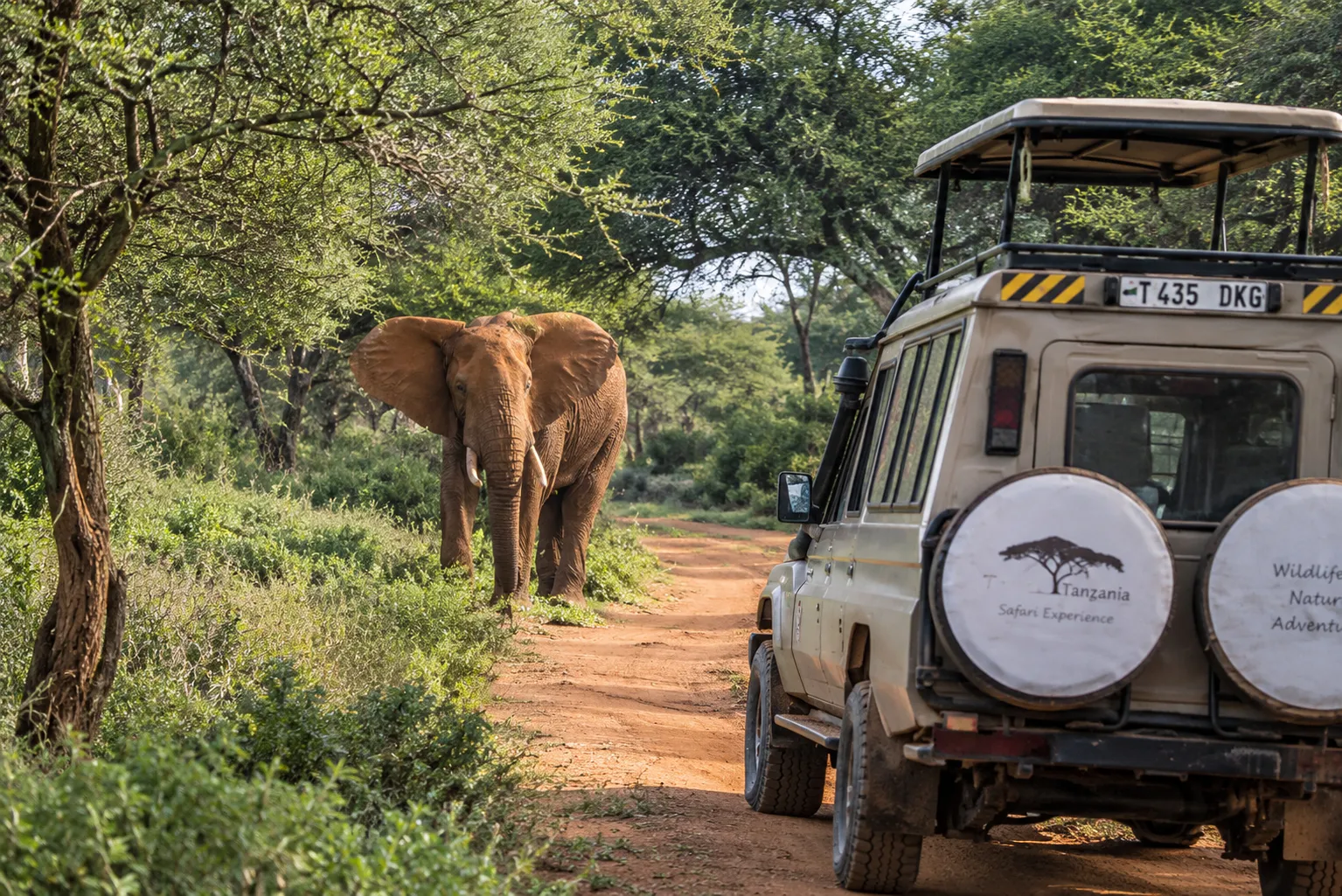
Day Trip Tarangire
A day of game drives in Tarangire with no overnight stay: elephants and baobabs, privately guided from Arusha City, with an optional Zanzibar flight at the start or end.
1 dayCalculate the price
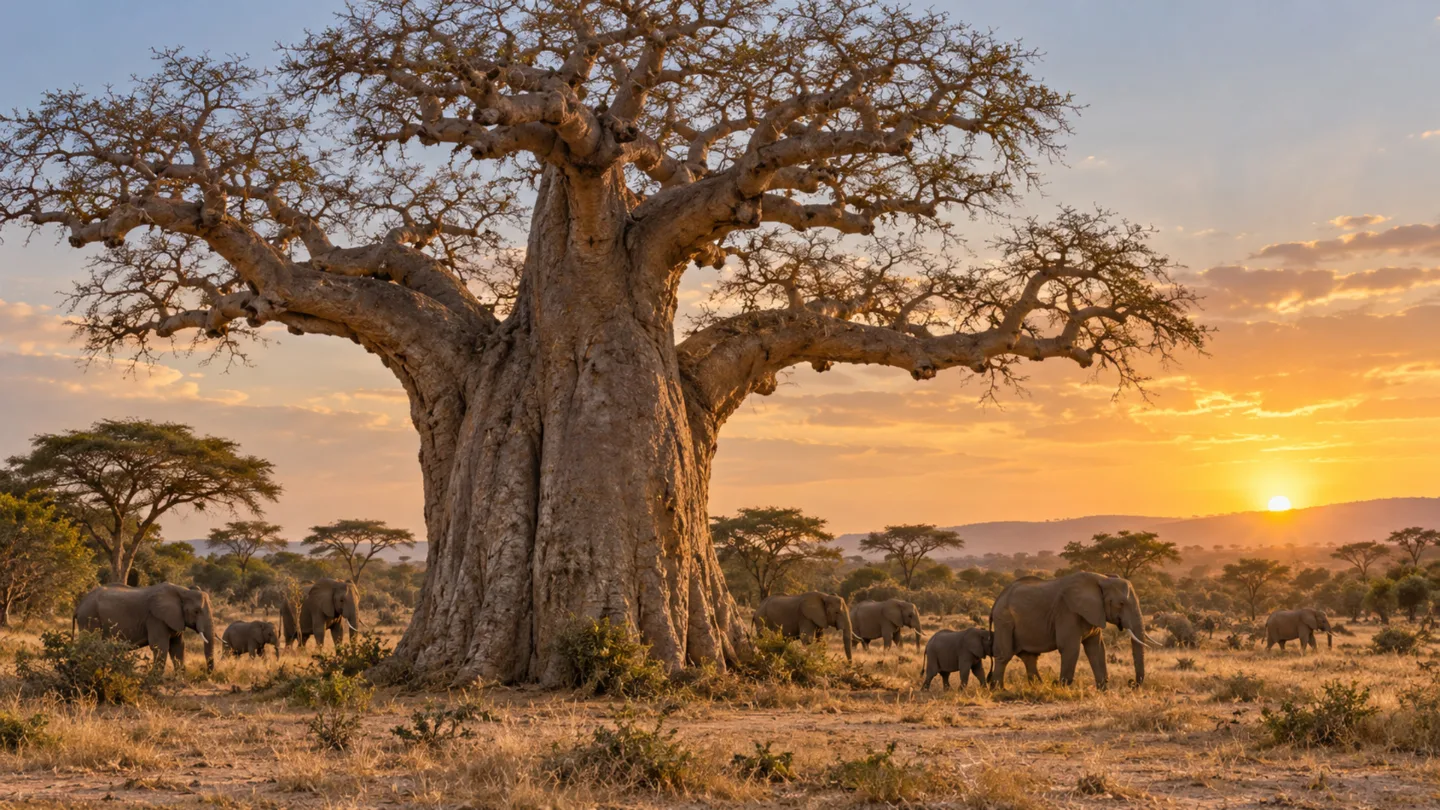
Around two hours' drive south-west of Arusha lies Tarangire: 2,850 square kilometres of savannah, bushland and baobabs.
Put your safari together in the trip planner.
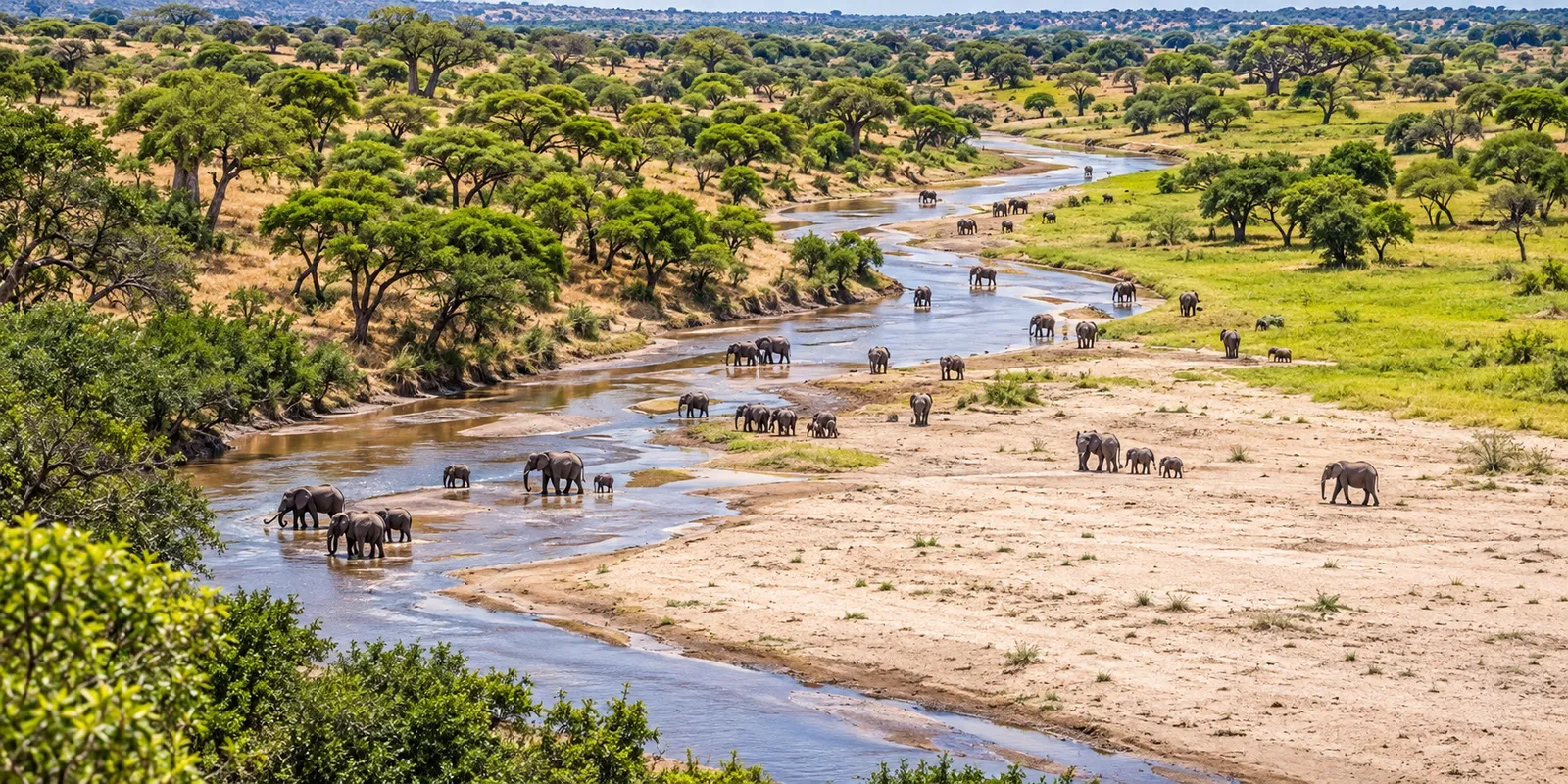
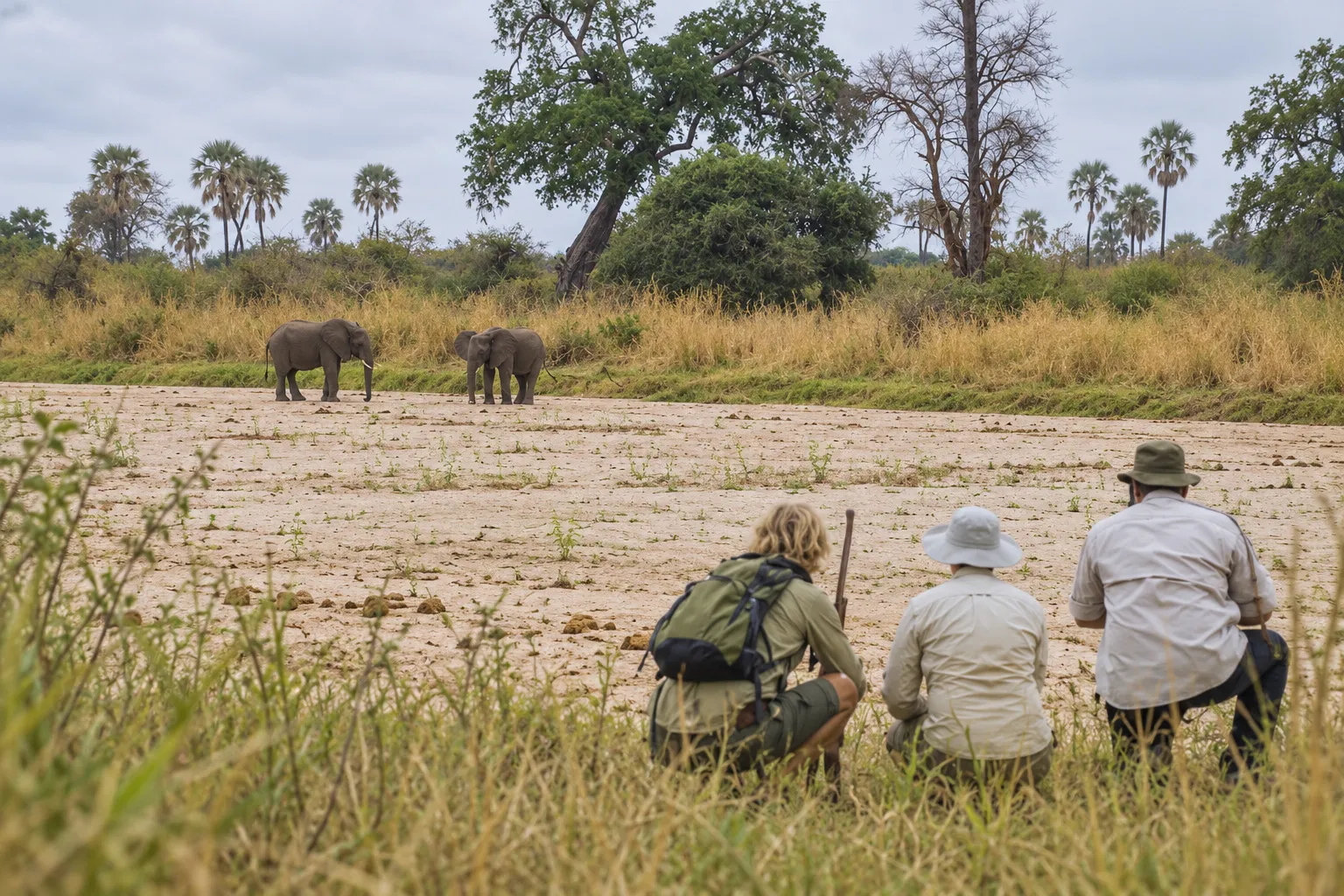
Around two hours' drive south-west of Arusha lies Tarangire: 2,850 square kilometres of savannah, bushland and baobabs. In the dry season the Tarangire River becomes the most important water source in the region, and the elephants arrive in herds of several hundred animals.
On top of that, Tarangire is pleasantly low-key: less visited than the Serengeti and the crater, yet the first safari day on 13 of our 18 routes. A park for settling in, then, with baobabs older than any lodge in the country.
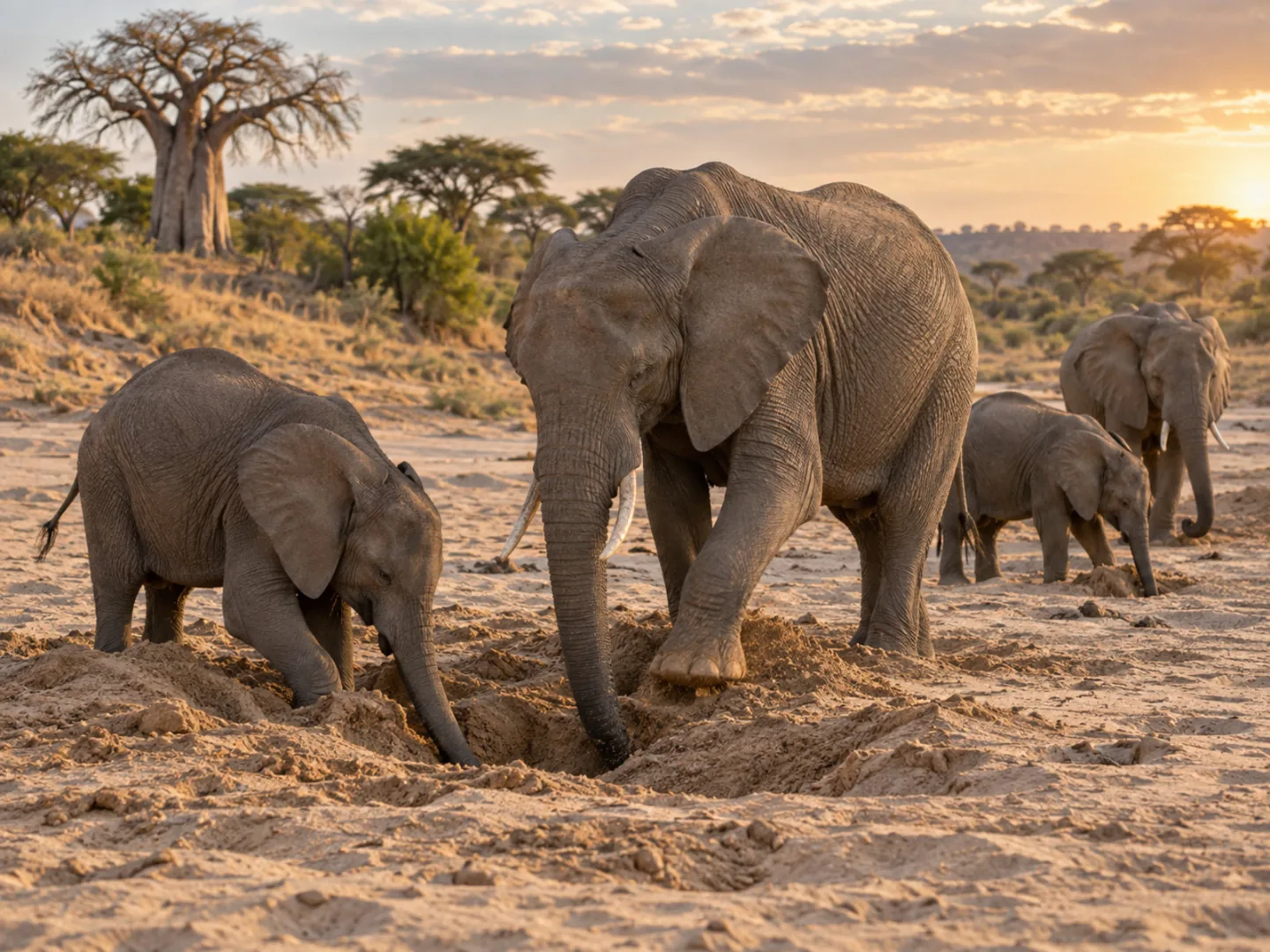
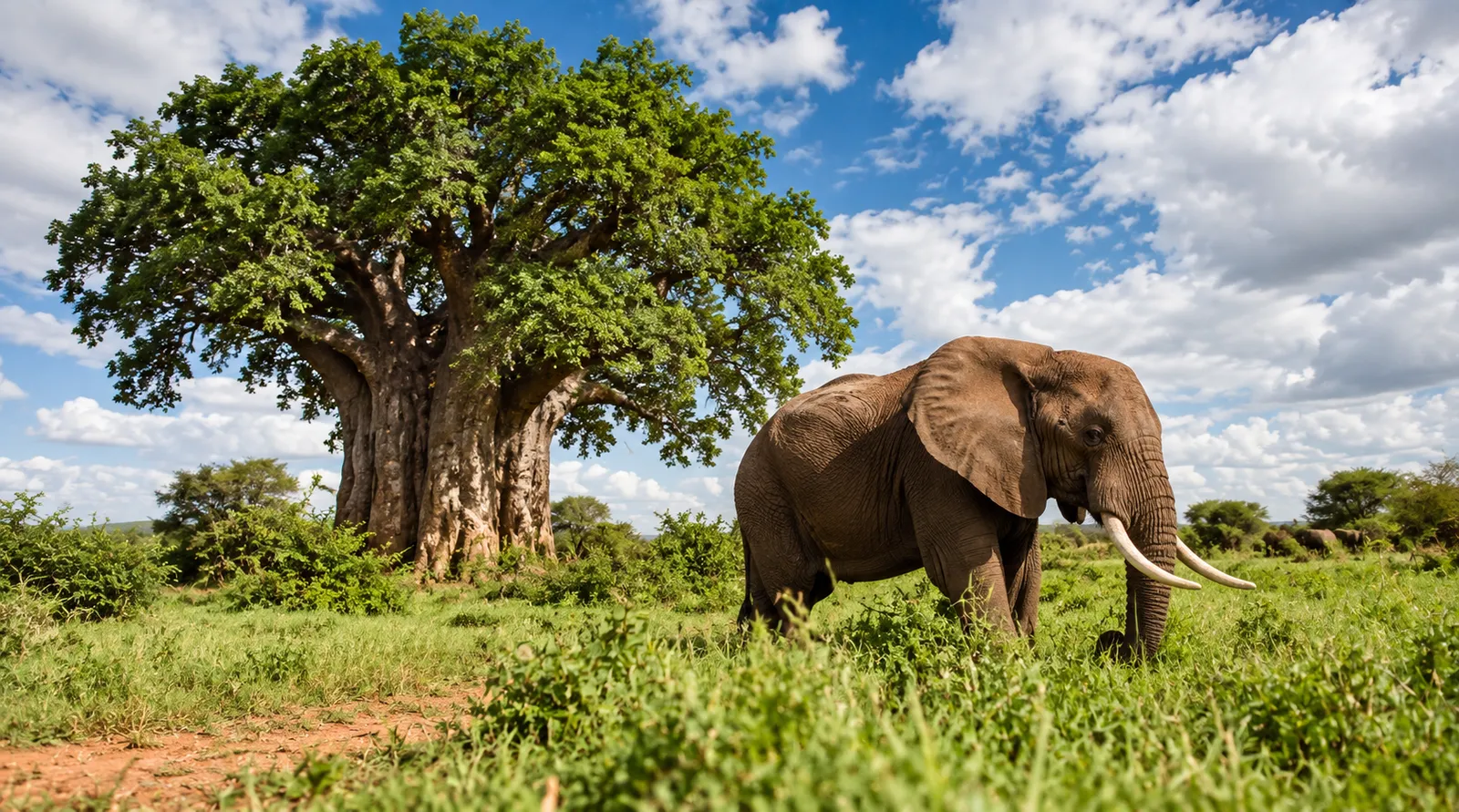
Towards the end of the dry season the river runs dry in places, and that is when the elephants show what they can do: with tusks and trunks they dig in the riverbed until groundwater comes up. Thirst is the mother of invention.
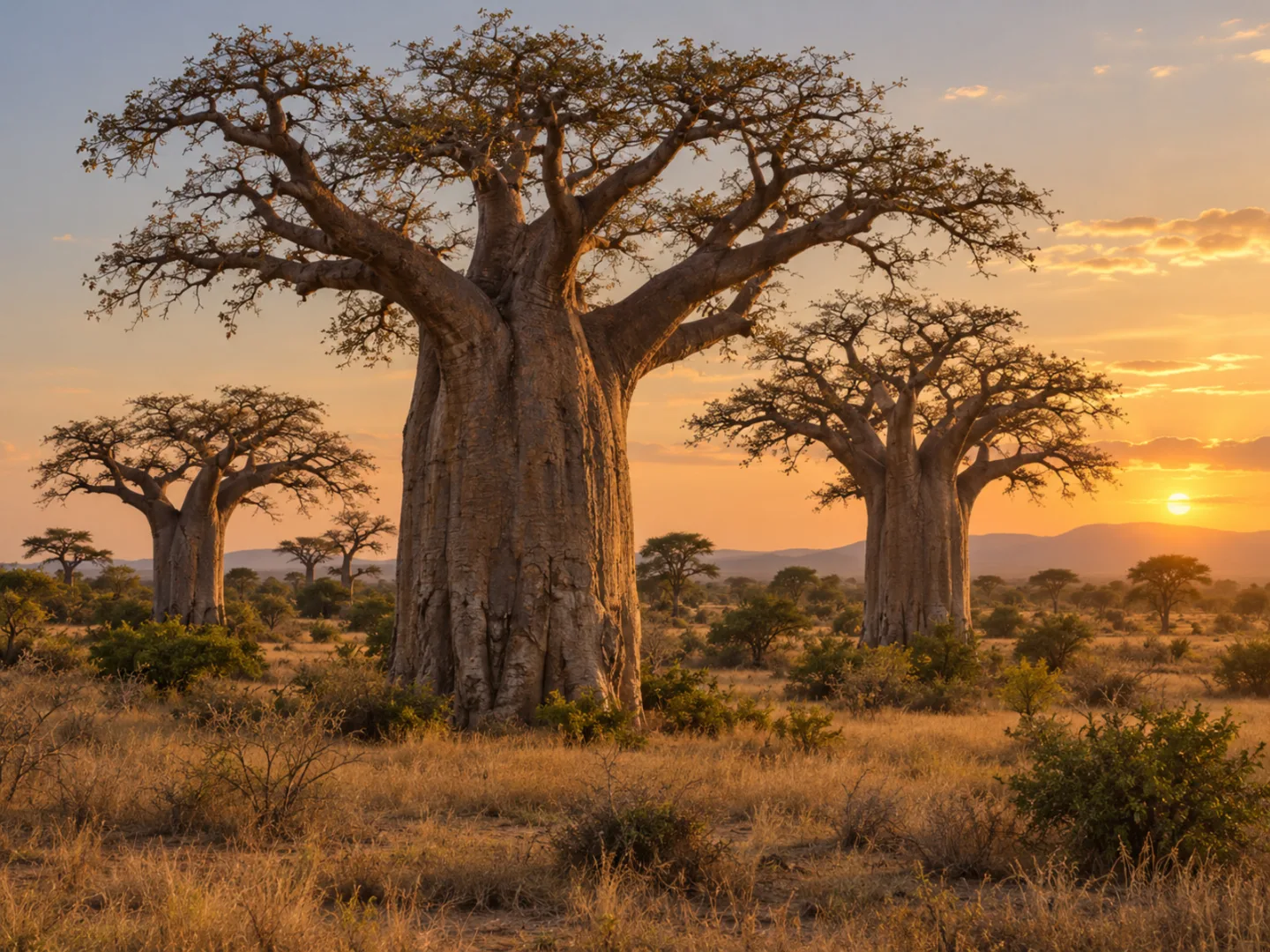
The second source is the baobabs. These trees store water in their thick trunks, and in the dry months the elephants help themselves. The furrowed giants take it in their stride; many of them have stood here for centuries.
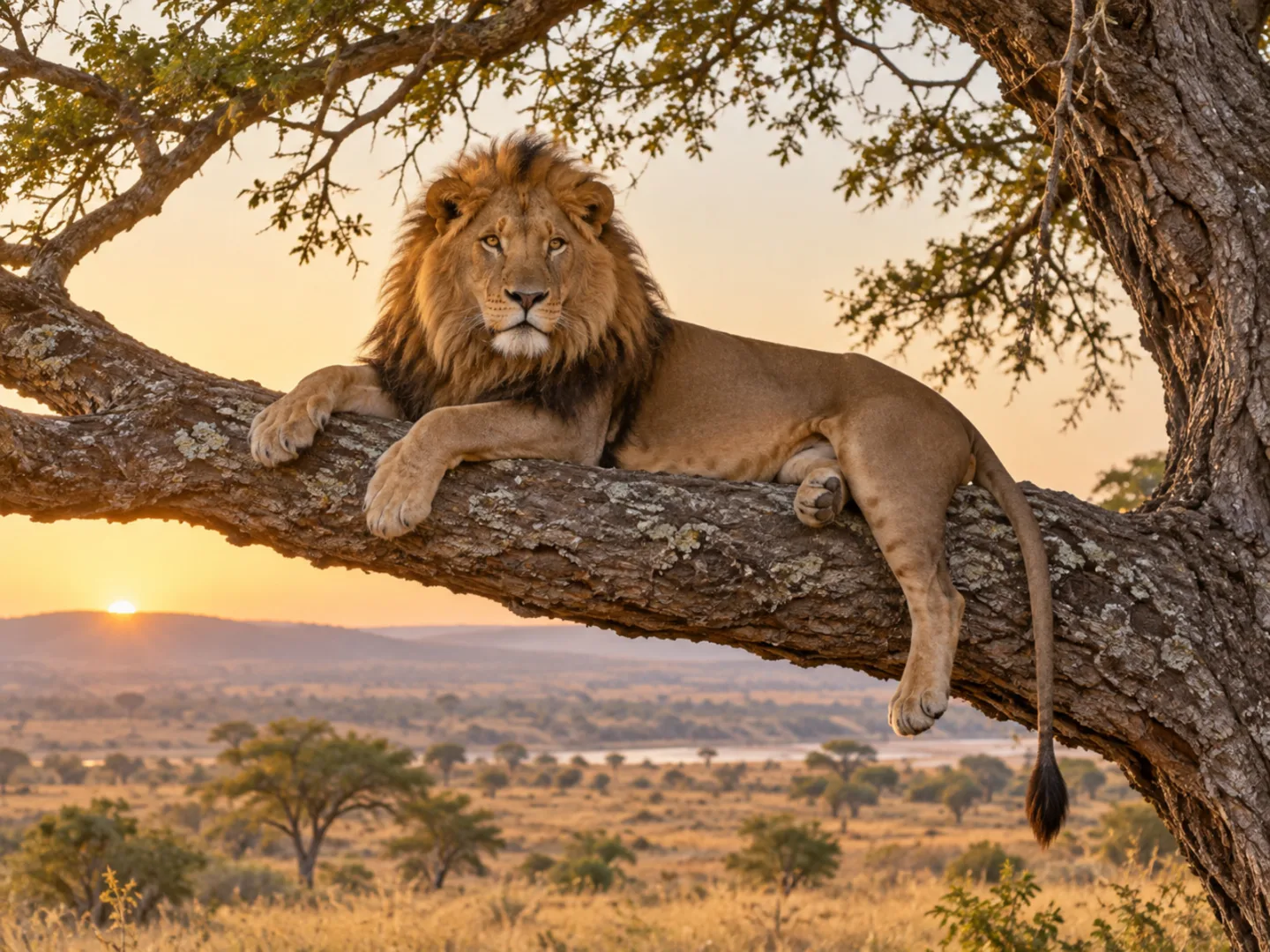
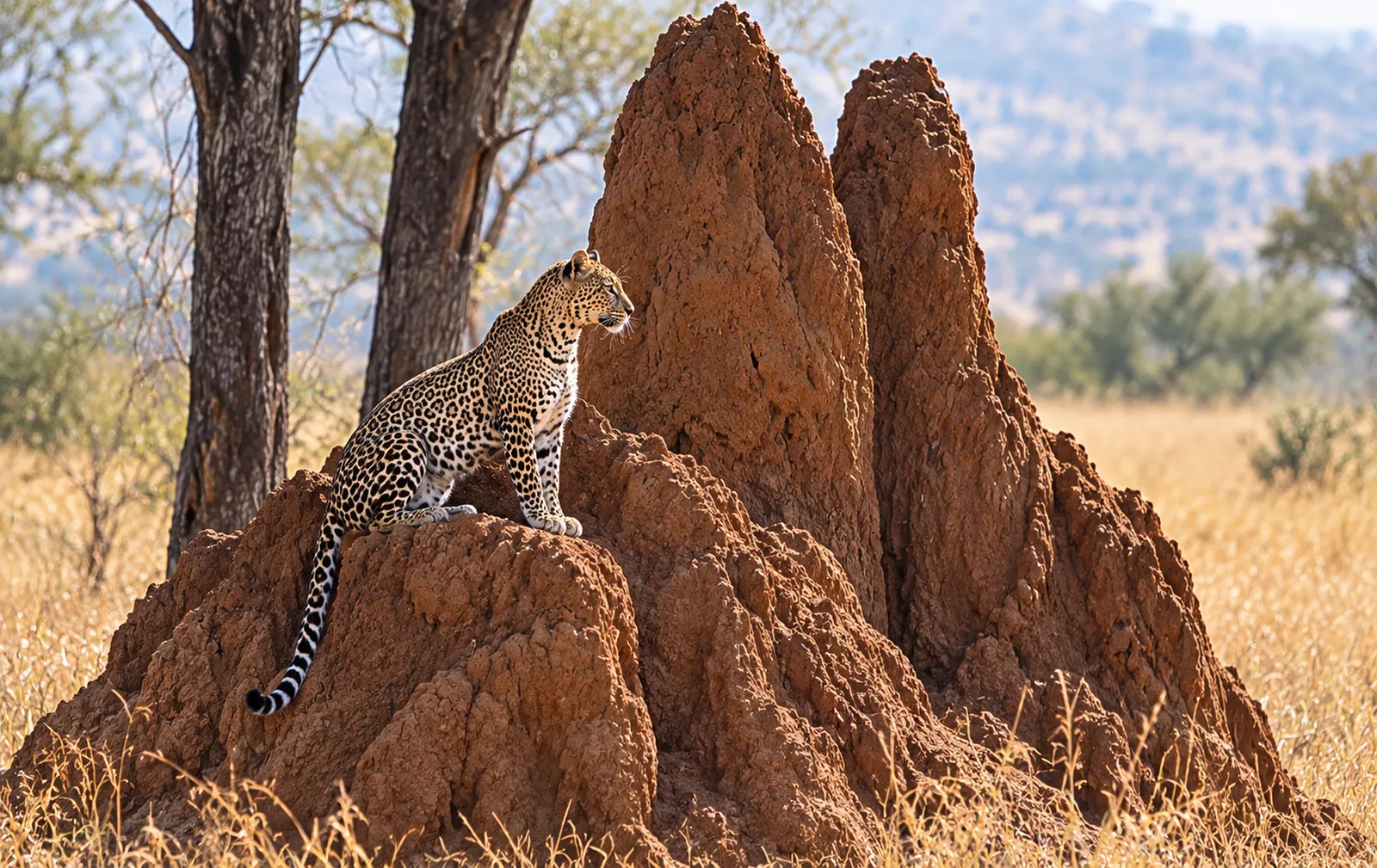
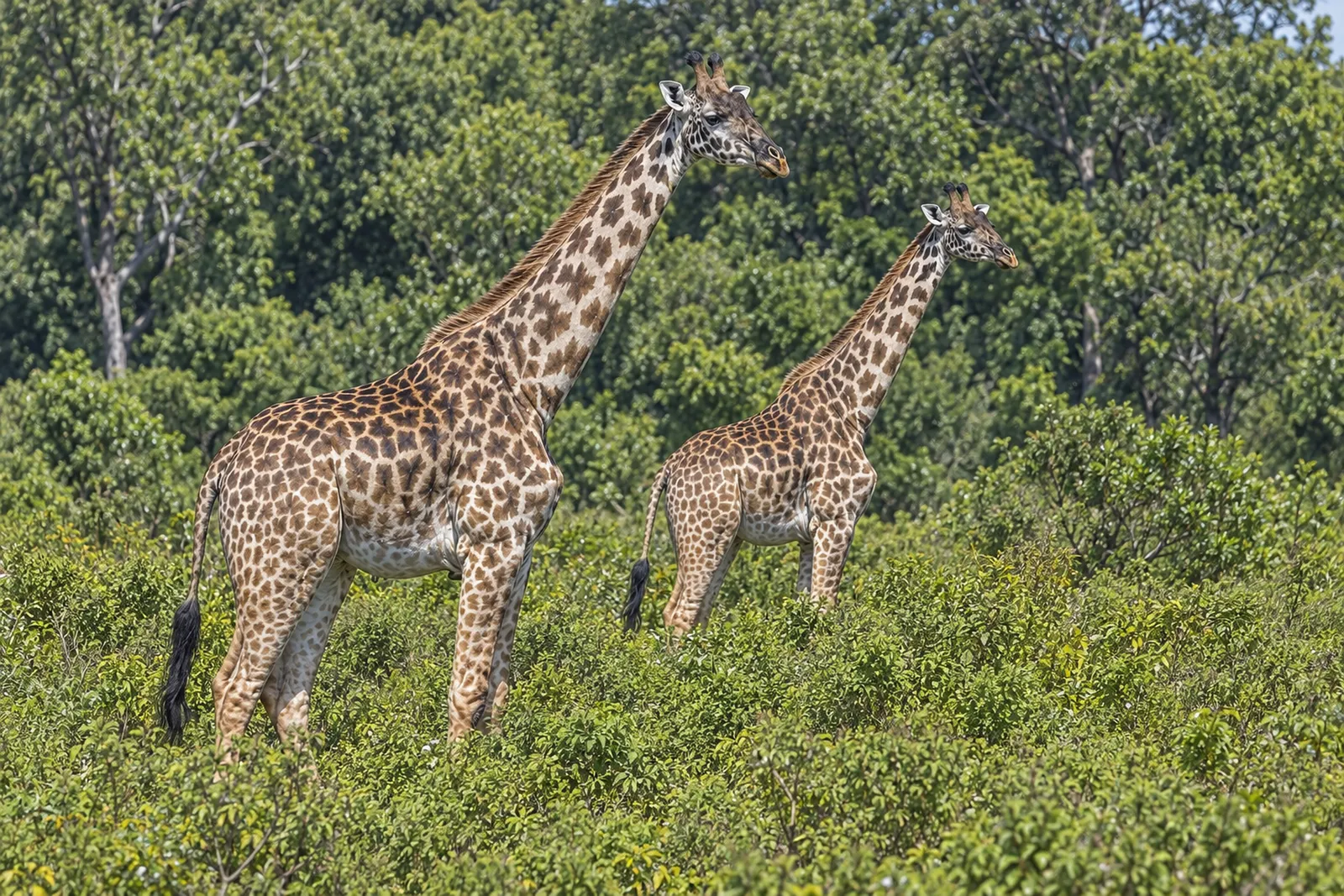
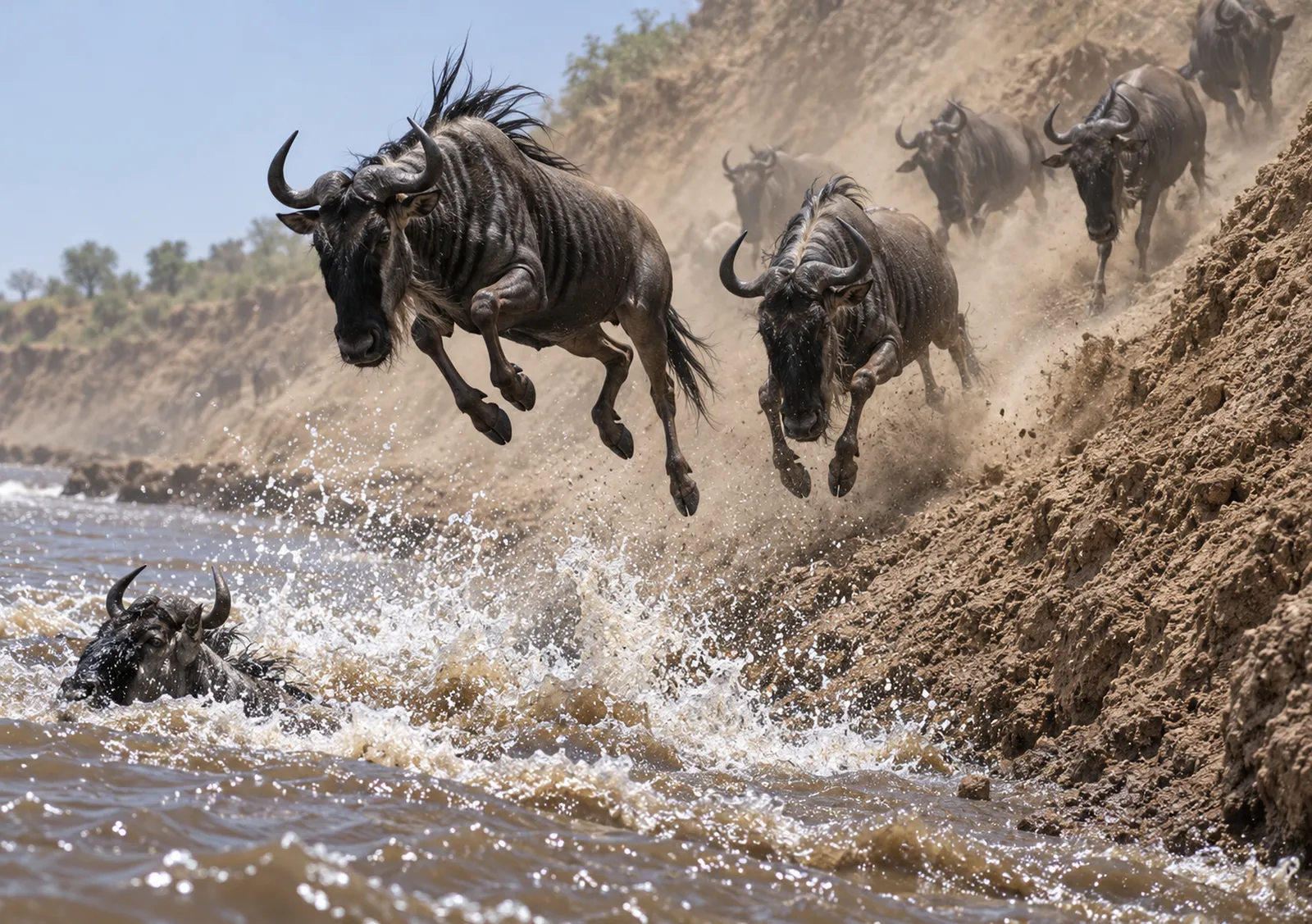
In Tarangire, where there is water, there is everything: in the dry season zebras, wildebeest, buffalo and giraffes come to the river from far away, and with them lions, leopards and cheetahs. Incidentally, it is not lions hanging in the trees here, but pythons. They take some finding too, usually by the guide.
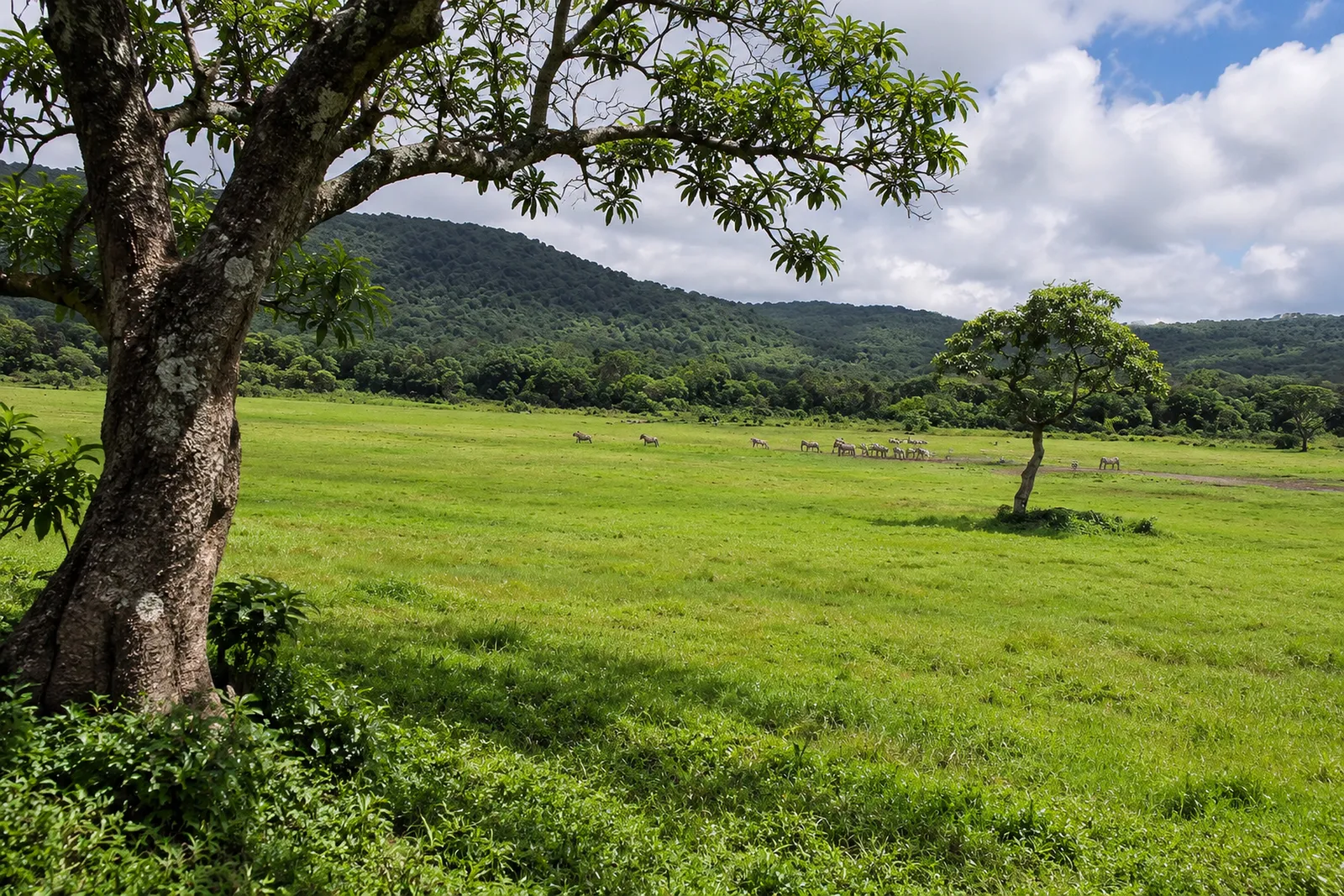
The landscape changes from the hilly north along the river, through open grassland nicknamed “Small Serengeti”, to the swamps in the south. An especially large number of bird species breed there, from hornbills and the lilac-breasted roller to eagles and vultures.
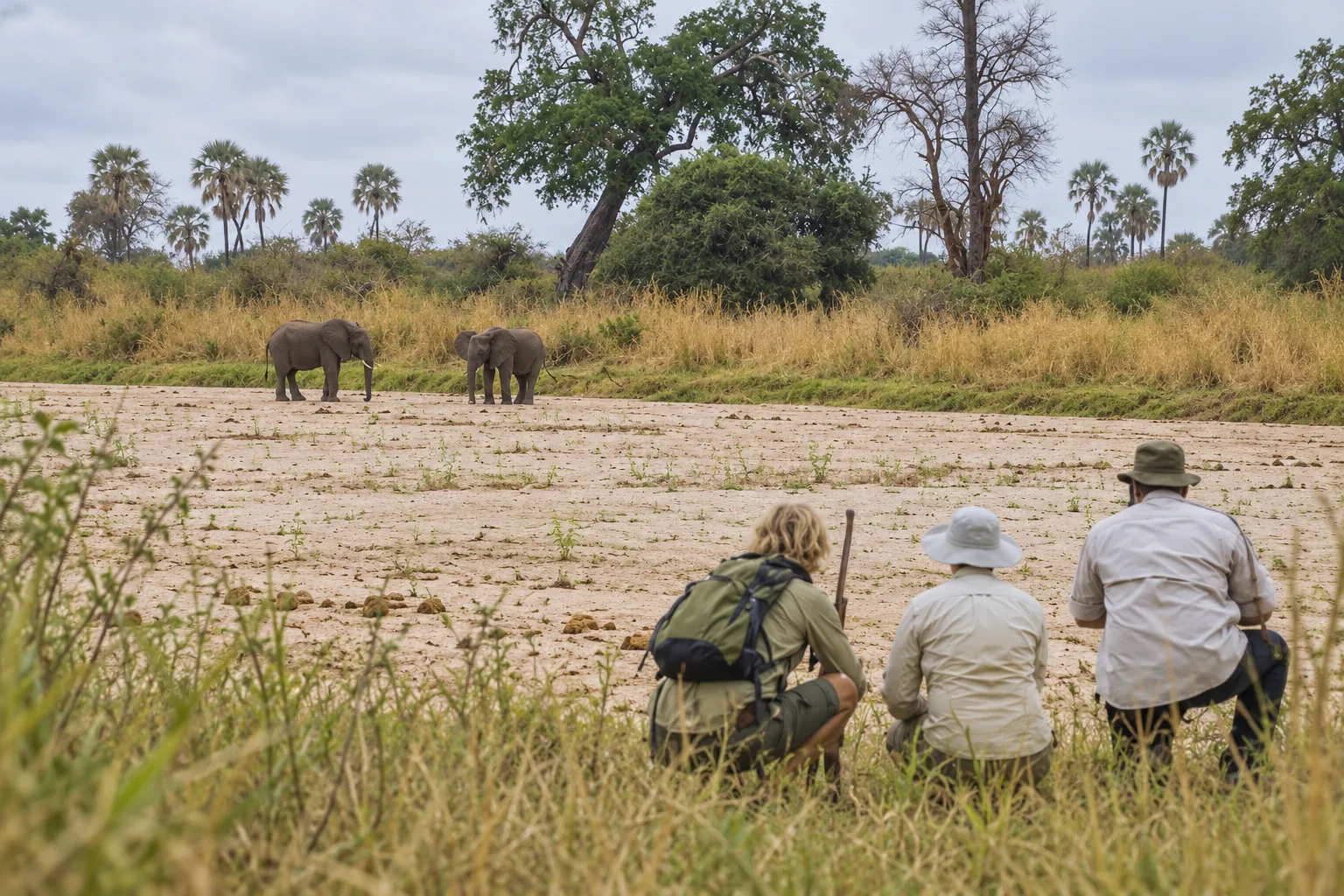
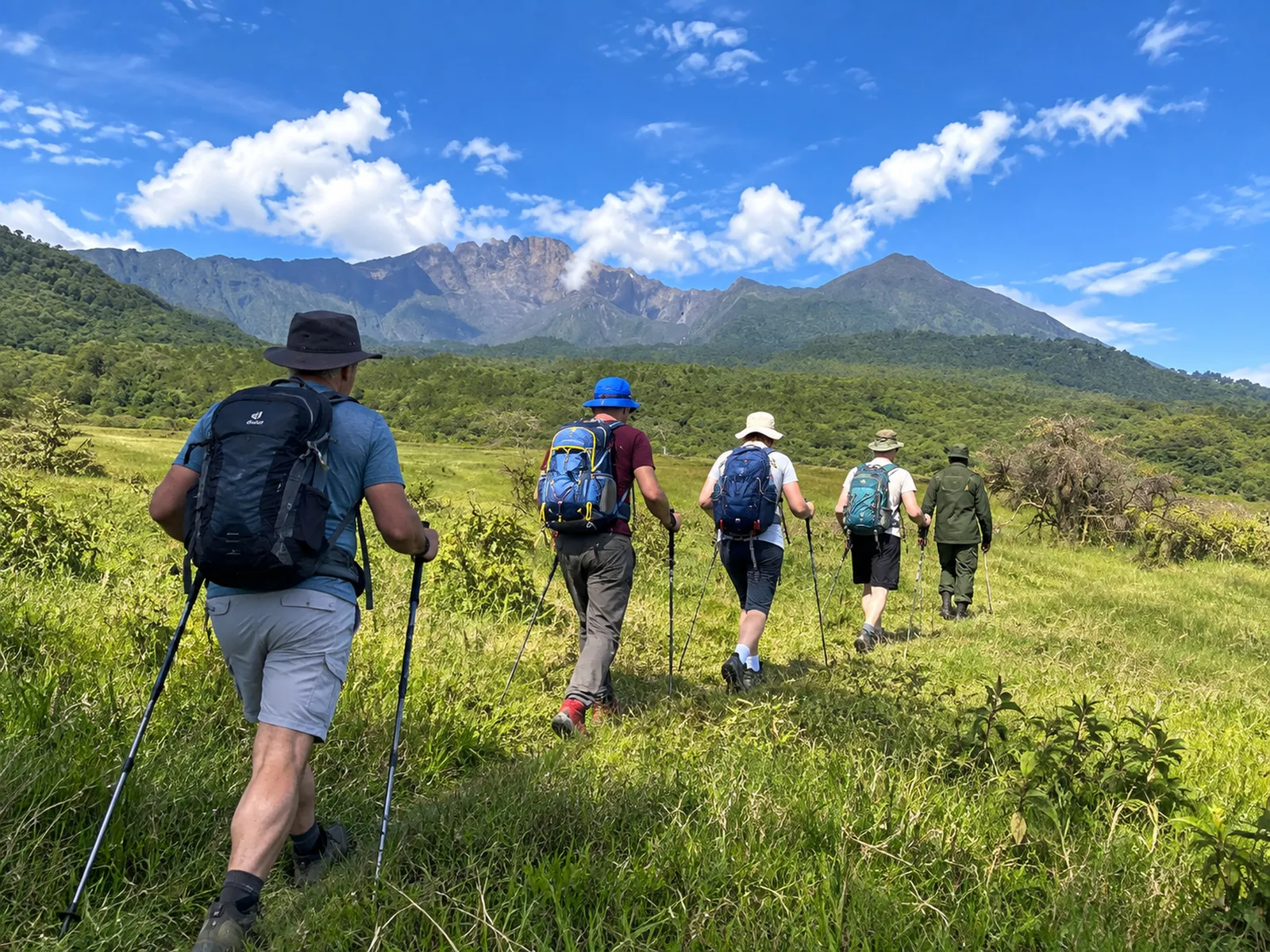
The core programme is the game drive along the river, privately with your own guide. Extras can be planned in as well. A hot-air balloon flight at dawn, for example: around 45 minutes in the air, three to four hours including pick-up and breakfast in the bush. Walking safaris and night game drives are available too, tied to certain lodges. All of this is optional, not standard; whatever you would like, we include in your quote.
On our routes, Tarangire is almost always the first park: 13 of the 18 routes come here, from the day trip to the full week. From here you continue to Lake Manyara (around an hour) or towards the crater and the Serengeti.
The best time for wildlife is June to October, when the dry park forces the herds to the river. From late December to February it is also dry, and busy at the water. Bird lovers come between November and April, when the migratory birds are here. Only in April and May does it get difficult: the ground is then swampy, and many animals leave the park for a while.
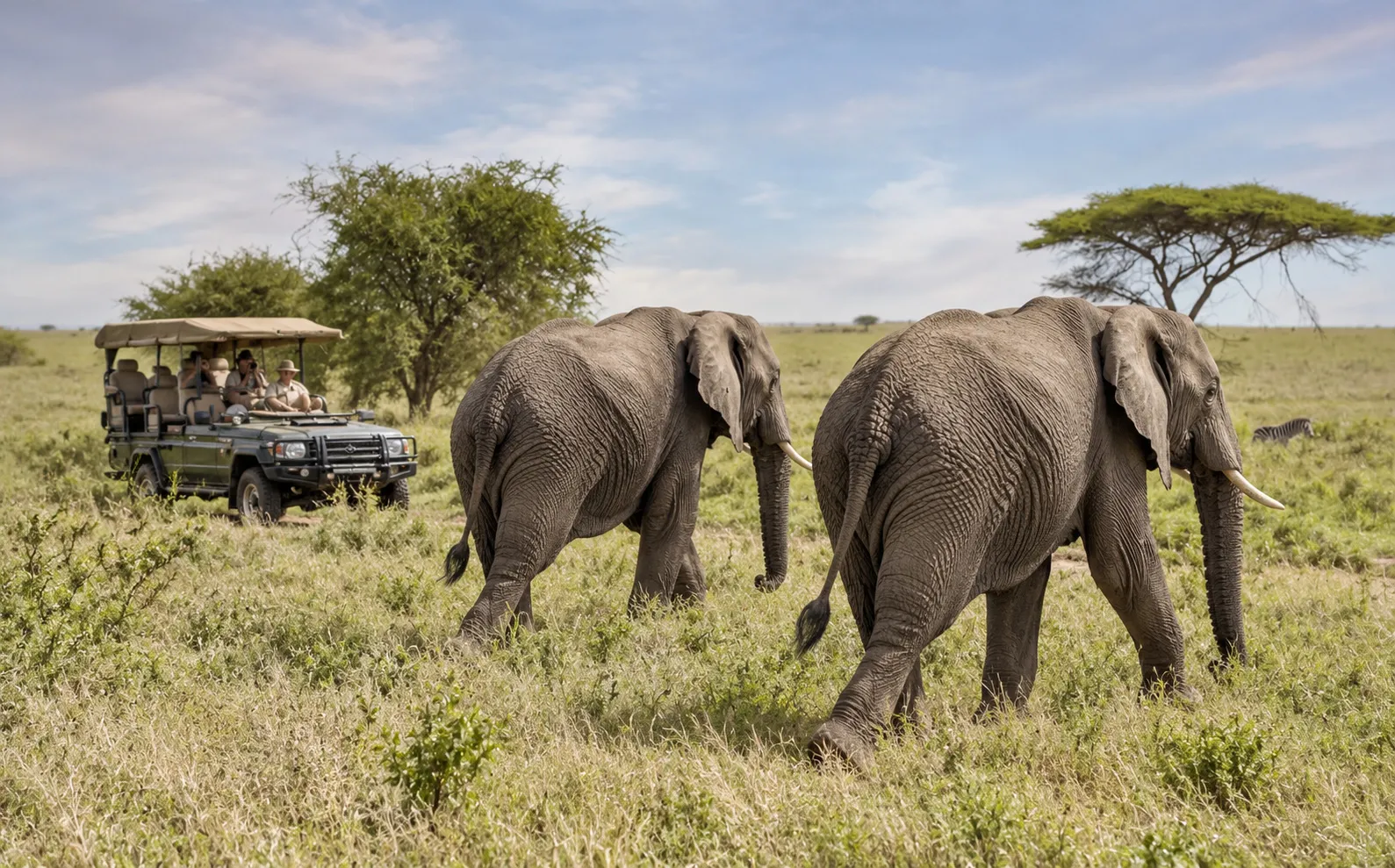
Within the park itself you get around by 4x4; on our safaris, one with a guide is always included.
Day entry is 50 USD for international visitors aged 16 and over, 15 USD for children aged 5 to 15 and free for children under 5; in the low season from 15 March to 15 May it is reduced to 45 USD. Camping costs extra (as of 2025, subject to change by the park authority). With us, the fees are included in the quoted price.
A day of game drives in Tarangire with no overnight stay: elephants and baobabs, privately guided from Arusha City, with an optional Zanzibar flight at the start or end.
Compact two-day safari from Arusha City: elephants on the Tarangire River, then down to the Big Five in the Ngorongoro Crater. One overnight stay, privately guided.
Two privately guided days: first to the elephants of Tarangire, then into the groundwater forest at Lake Manyara, with one overnight stay, from Arusha City.
Three days through Arusha National Park, Tarangire and Lake Manyara: three landscapes in three days, with two nights on the road, from Arusha City.
Three days on the northern route from Arusha City: Tarangire, Lake Manyara and the Ngorongoro Crater, with two overnight stays and a Big Five finale.
Four days, four parks: from Arusha National Park via Tarangire and Lake Manyara down into the Ngorongoro Crater, with three nights from Arusha City.
Four days from Arusha City: elephants in Tarangire, two days in the central Serengeti and finally the Ngorongoro Crater. Three nights, privately guided.
The great northern circuit in five days: from Tarangire via Lake Manyara into the Serengeti and finally down into the crater. Four nights, privately guided.
Five travel days, three of them in the Serengeti: a start in Tarangire, a finish in the Ngorongoro Crater, four nights from Arusha City.
Six days right across the north, from the Momella Lakes to the crater floor, with two full days in the Serengeti and five nights.
Six days with the focus on the Serengeti: three days in a row in the park, framed by Arusha National Park, Tarangire and the Ngorongoro Crater.
Seven days, the whole of the north: first Arusha National Park, Tarangire and Manyara, then three Serengeti days, and finally the crater.
Seven days, Serengeti first: fly in, stay three days, then back via the crater, Manyara and Tarangire all the way to Arusha National Park.
We put your route together — free of obligation and in person. We reply the same day, usually faster on WhatsApp.

Prefer to talk? Dominic Dreiner is happy to help.
Alle Preise sind unverbindliche Richtpreise pro Person bei zwei gemeinsam reisenden Personen, einschließlich der in der Leistungsübersicht genannten Leistungen und ohne Flüge nach Tansania. Bei größeren Gruppen sinkt der Preis pro Person. Der endgültige Preis richtet sich nach Reisezeitraum, Gruppengröße, gewählten Unterkünften und Verfügbarkeit; er wird Ihnen im individuellen Angebot verbindlich genannt. Angebote sind bis zur abschließenden Verfügbarkeitsprüfung freibleibend. Es gelten unsere AGB.